Bodnath
Bodnath
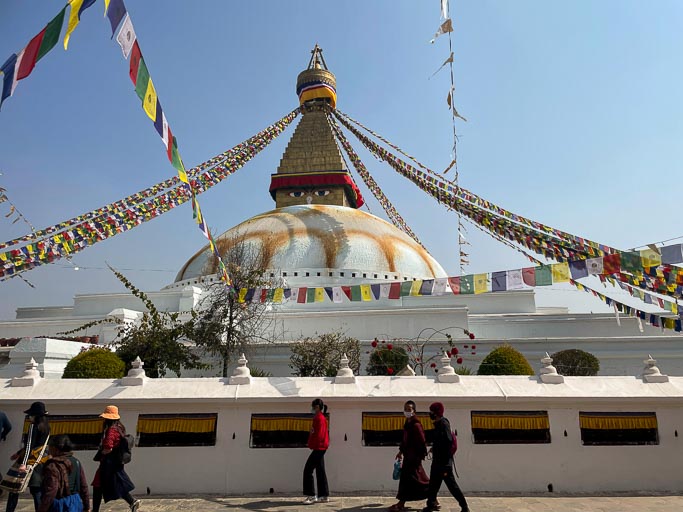
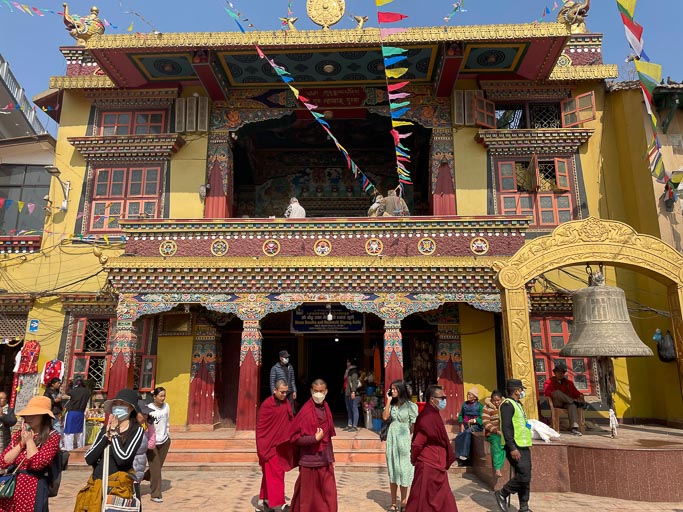
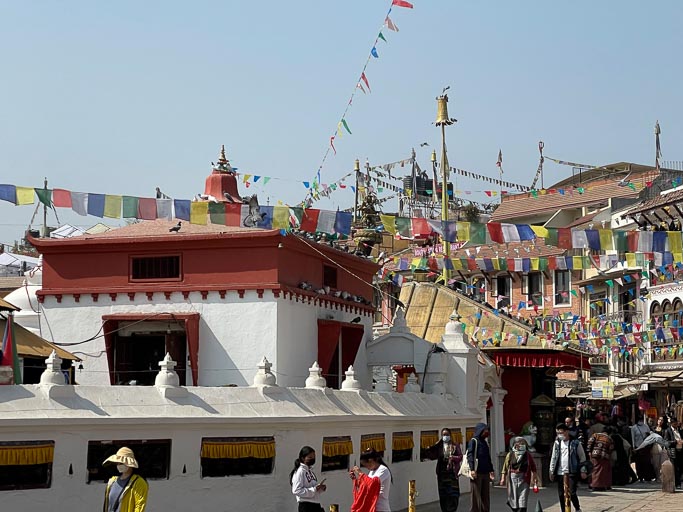
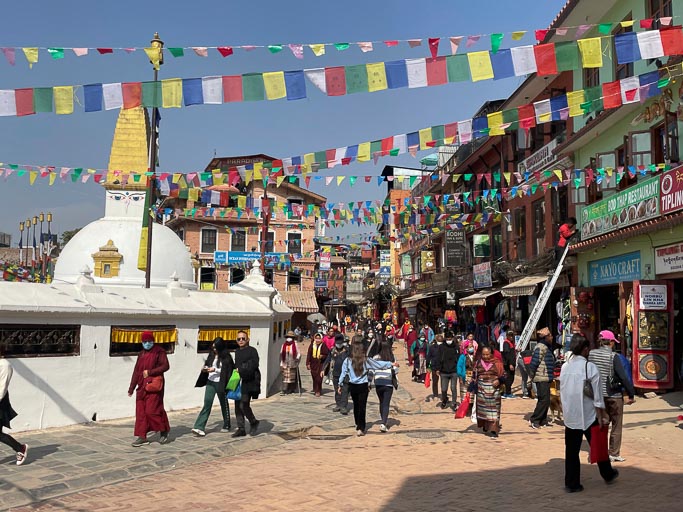
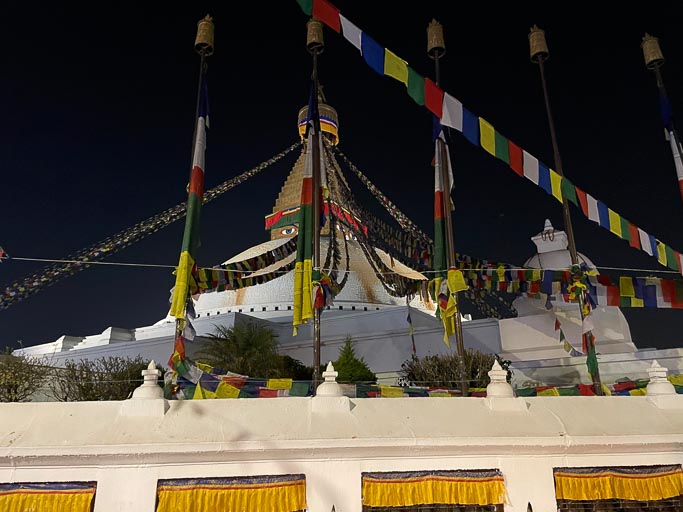
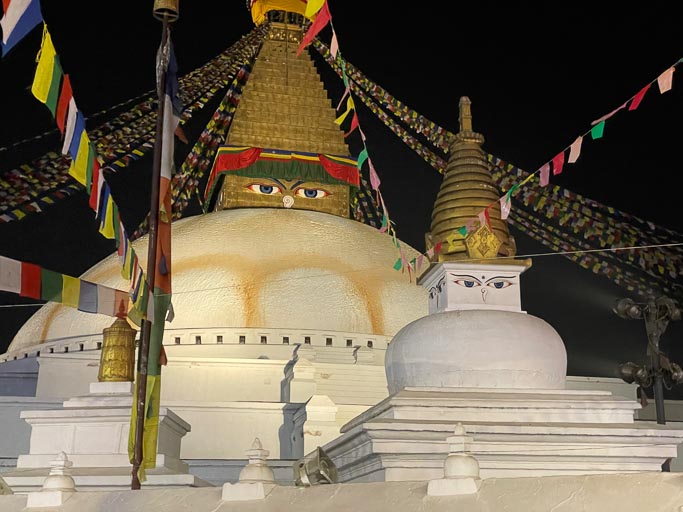
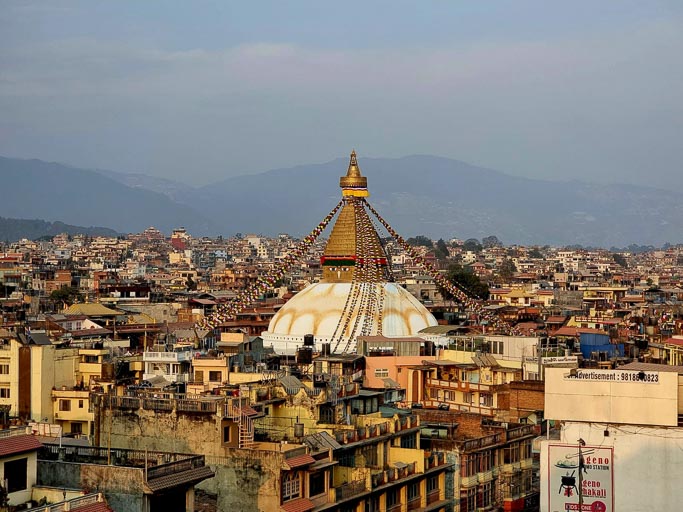
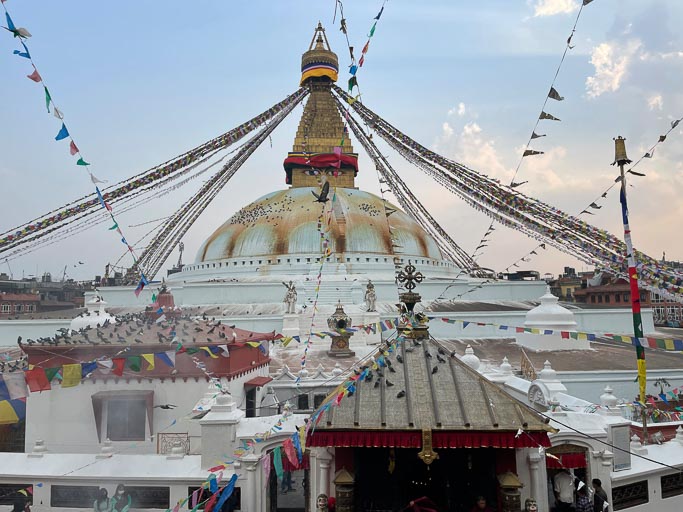
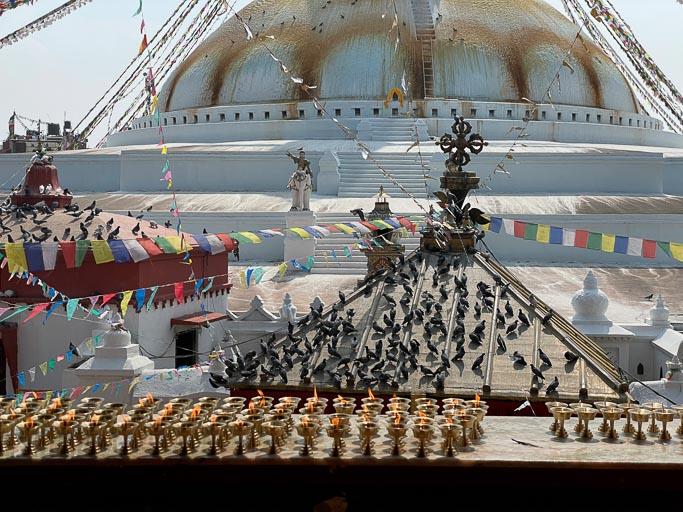
Bodnath ist ein ehemals ländlicher Vorort im Nordosten von Kathmandu in Nepal. Bekannt ist Bodnath wegen des großen Stupa, der seit Jahrhunderten eines der bedeutendsten Ziele buddhistischer Pilger aus Nepal und den umliegenden Regionen des Himalaya ist. Der Cini-Lama, der dritthöchste Würdenträger der Tibeter nach dem Dalai Lama und dem Panchen Lama, residiert in Bodnath.
Die Entstehung des mit ca. 36 m Höhe einer der größten Stupas seiner Art geht der Überlieferung nach zurück auf die Licchavi-Könige des 5. Jahrhunderts. Im Mittelalter hatte er so gut wie keine Bedeutung, da der Buddhismus aus dem Alltagsleben der Inder und Nepalesen verschwunden war. Erst mit der Zuwanderung zahlreicher Tibeter ins Kathmandu-Tal erlangte er wieder viel von seiner ursprünglichen Bedeutung zurück.
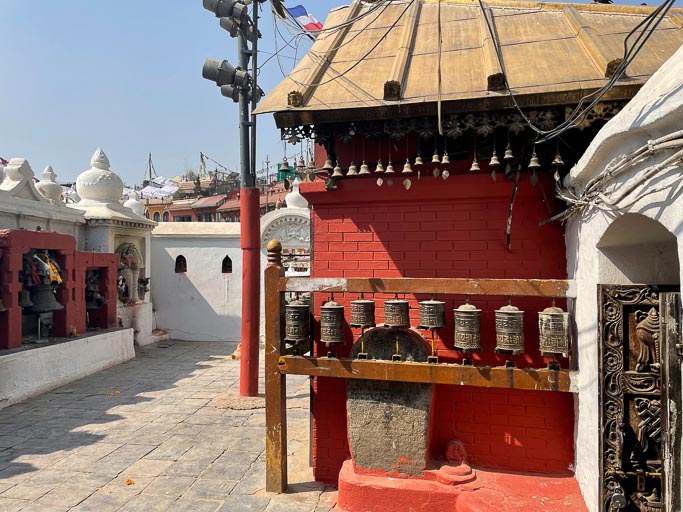
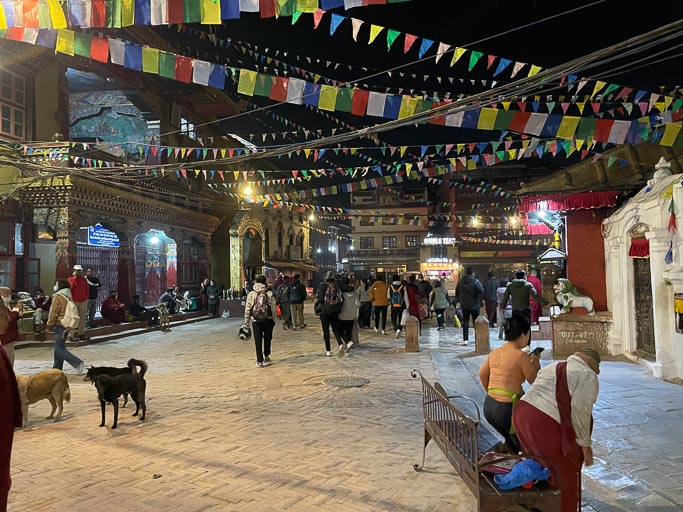
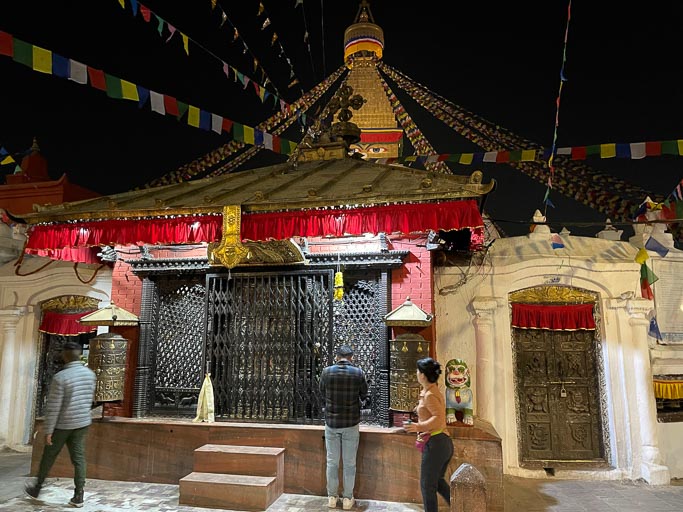
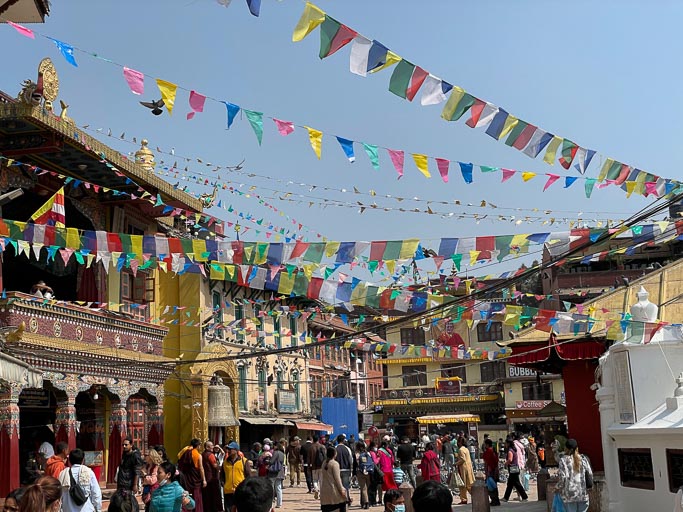
Buddhisten finden sich vor allem im Morgengrauen und zur Abenddämmerung bei dem Bauwerk ein, um es im Uhrzeigersinn zu umrunden (Kora) und die in der Außenwand angebrachten Gebetsmühlen zu drehen. In Vollmondnächten (vgl. Vesakh-Fest) werden tausende Butterlämpchen auf den Terrassen, welche den Stupa im Grundriss eines Mandalas umgeben, entzündet. Einmal pro Jahr wird der halbkugelförmige Korpus neu geweißt und zum Neujahrsfest Losar werden die safranfarbenen Bögen erneuert. (Quelle: Wikipedia)
Bilder einer Reise in 2023...