Budhanilkantha
Budhanilkantha
Budhanilkantha – Der schlafende Vishnu
Budhanilkantha ist eine Tempelanlage am Fuß des Shivapuri nördlich von Kathmandu. Sie ist Vishnu in seiner Form als Jalashayana Narayan gewidmet.
Der Name setzt sich aus budha („im Schlamm verborgen“) und nilkantha („Blauhals“) zusammen.
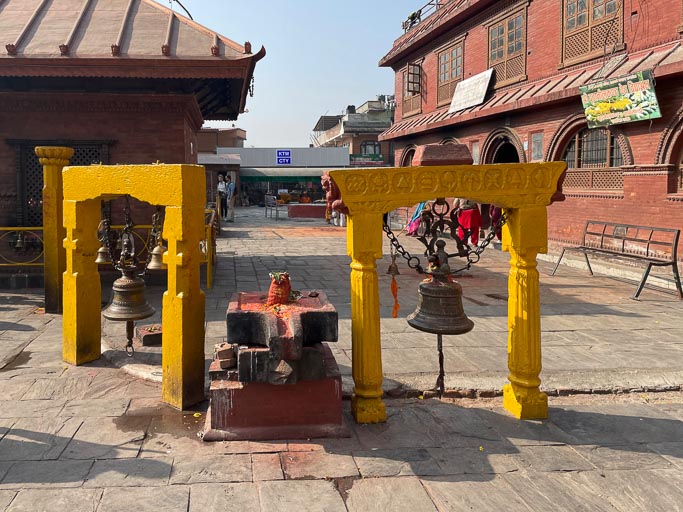
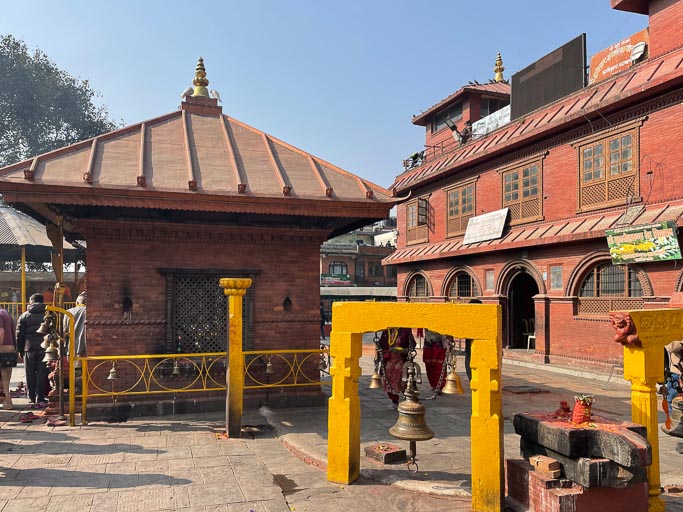
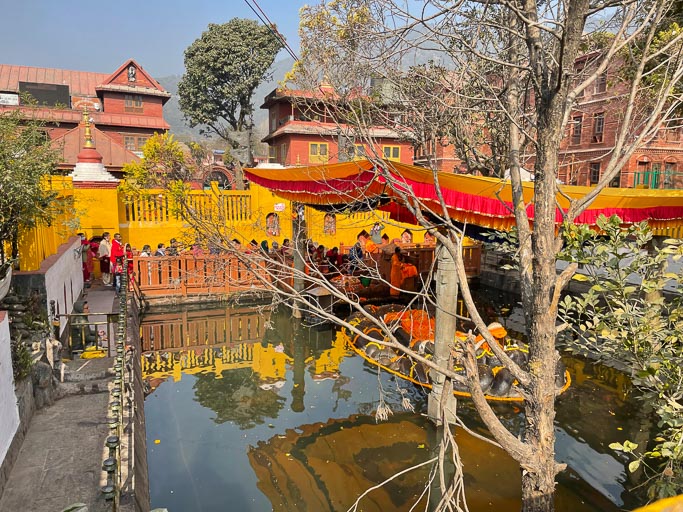
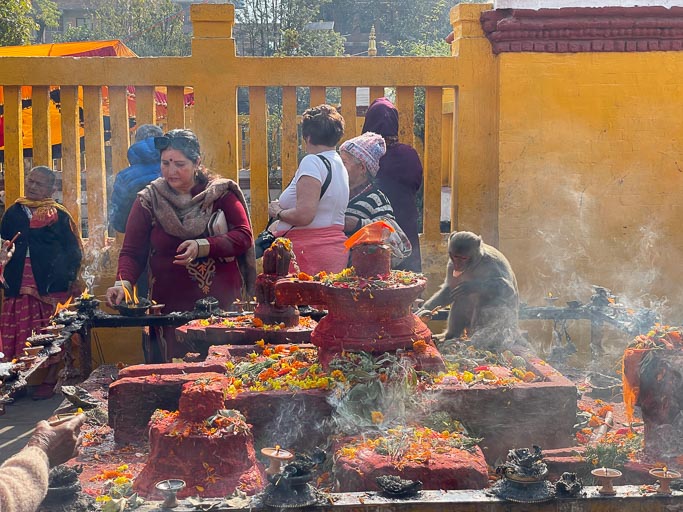
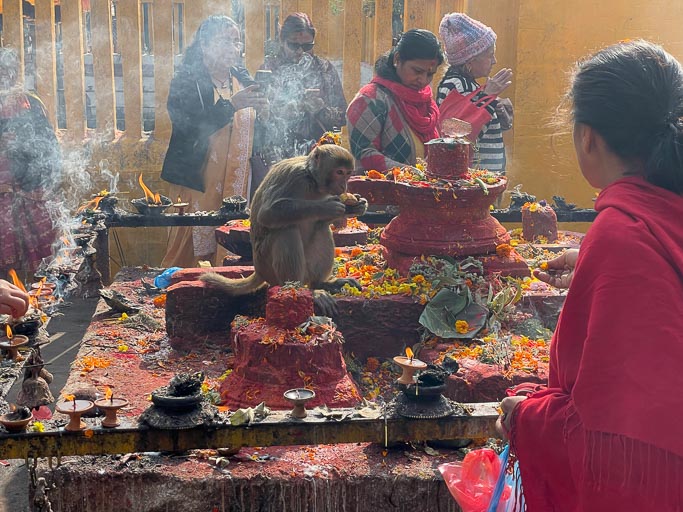
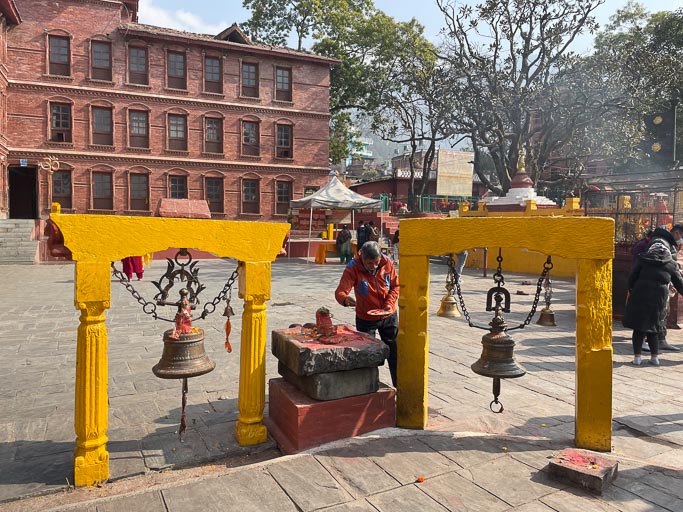
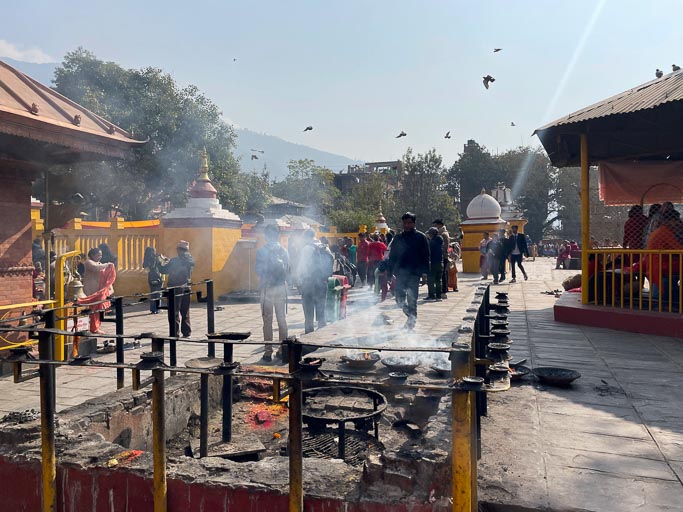
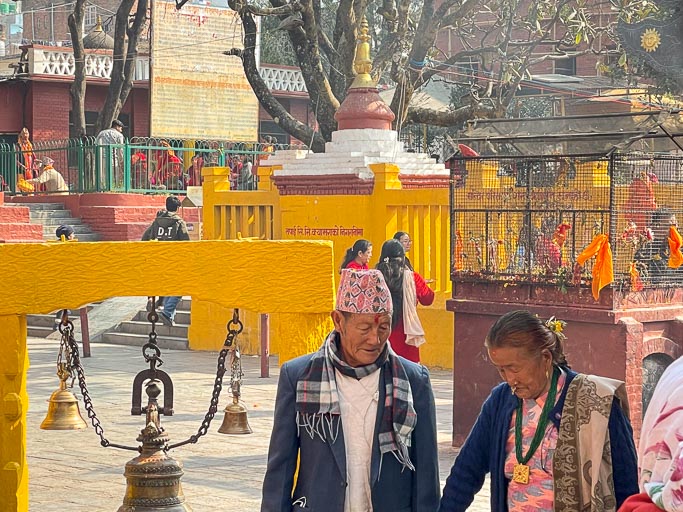
Zentrum der Anlage ist ein rund 13 Meter langer, den Urozean symbolisierender Wassertank mit dem berühmten Kultbild des „Schlafenden Vishnu“. Umgeben ist er von kleineren Tempeln, Schreinen neueren Datums, einem Shiva-Lingam sowie Sitzgelegenheiten. Der gesamte Bezirk ist von einer Mauer mit vier Toren eingefasst.
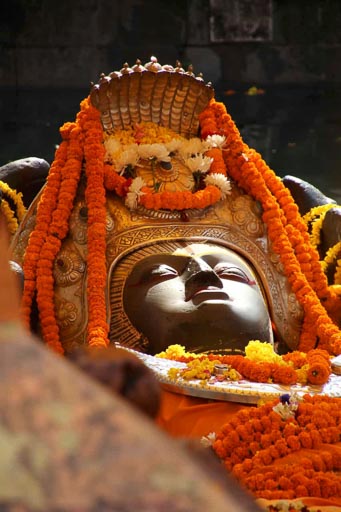
Die etwa fünf Meter große Statue zeigt Vishnu auf dem vielfach gewundenen Leib der Weltenschlange Ananta ruhend, deren elf Köpfe schützend über ihm aufragen. Seine vier Hände tragen die typischen Attribute: Diskus (Chakra), Lotos (Padma), Muschelhorn (Shankha) und Keule (Gada). Aus seinem Nabel entspringt ein Lotos, aus dem Brahma, der Schöpfergott, hervorgeht.
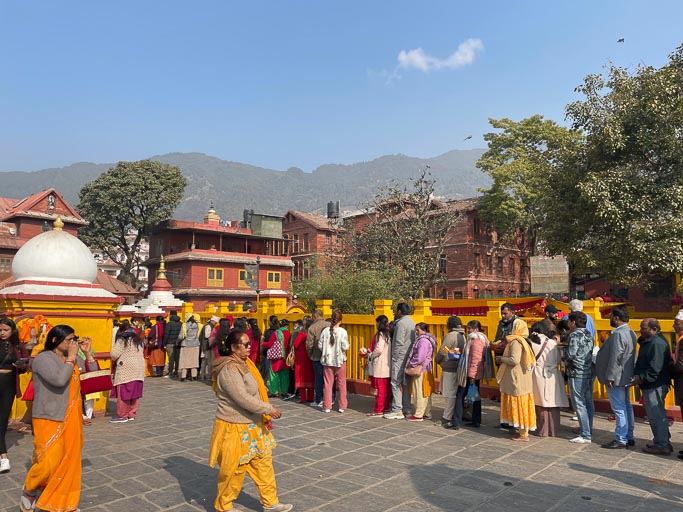
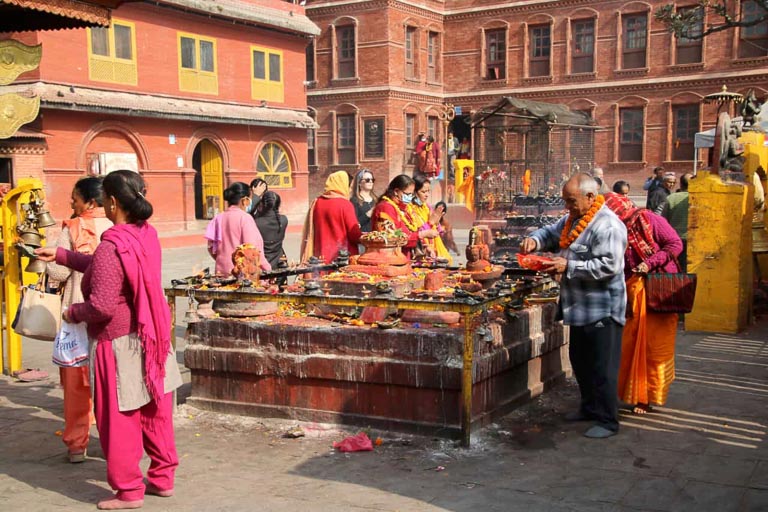
Der Zugang zur Statue ist nur Hindus bis zum Fußende gestattet, das Idol selbst darf ausschließlich von Brahmanen betreten werden. Im Rahmen einer täglichen Puja ab 9:00 Uhr wird das Gesicht und die Füße der Statue zunächst mit Wasser, später mit einer Mischung aus Ghee, Milch, Joghurt, Honig und Zucker gereinigt. Zum Abschluss werden von Pilgern dargebrachte Blumen um das Haupt Vishnus drapiert.
Bilder einer Reise in 2023.
Budhanilkantha – The Sleeping Vishnu
Budhanilkantha is a temple complex at the foot of Shivapuri, north of Kathmandu. It is dedicated to Vishnu in his form as Jalashayana Narayan.
The name combines budha (“hidden in the mud”) and nilkantha (“blue throat”).
At the center of the complex lies a 13-meter-long water tank, symbolizing the primordial ocean, containing the famous idol of the “Sleeping Vishnu.” Surrounding it are smaller temples and shrines, a Shiva lingam, and seating areas. The entire temple compound is enclosed by a wall with four gates.
The approximately five-meter statue depicts Vishnu reclining on the coiled body of the cosmic serpent Ananta, whose eleven heads rise protectively above him. In his four hands he holds his attributes: the discus (Chakra), lotus (Padma), conch shell (Shankha) and mace (Gada). From his navel springs a lotus, from which Brahma, the creator god, emerges.
Access to the statue is permitted only to Hindus up to the foot of the idol; the figure itself may be approached only by Brahmins. During the daily puja at 9:00 a.m., the face and feet of the statue are washed first with water, then with a mixture of ghee, milk, yogurt, honey, and sugar. Finally, flowers offered by pilgrims are placed around Vishnu’s head.
Images from a trip in 2023.