Pashupathinath
Pashupathinath
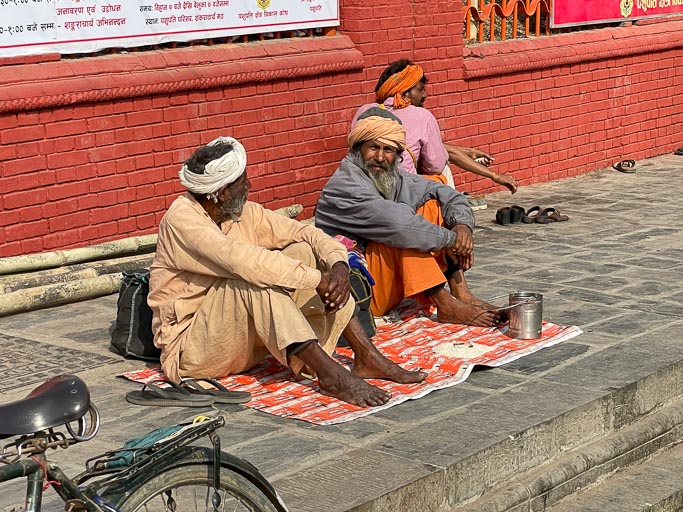
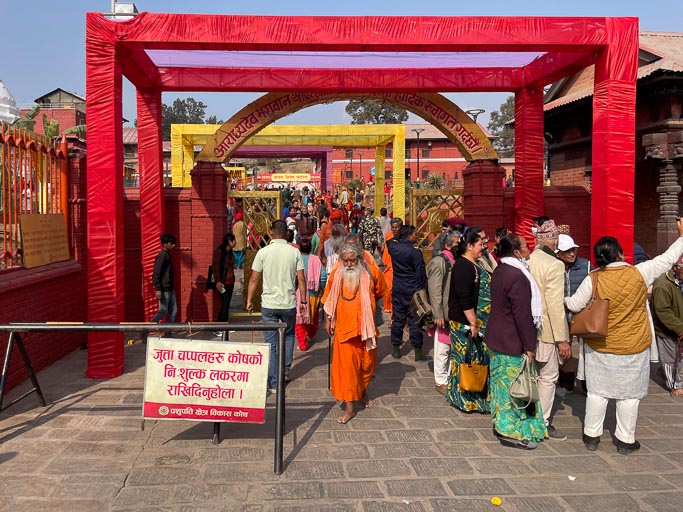
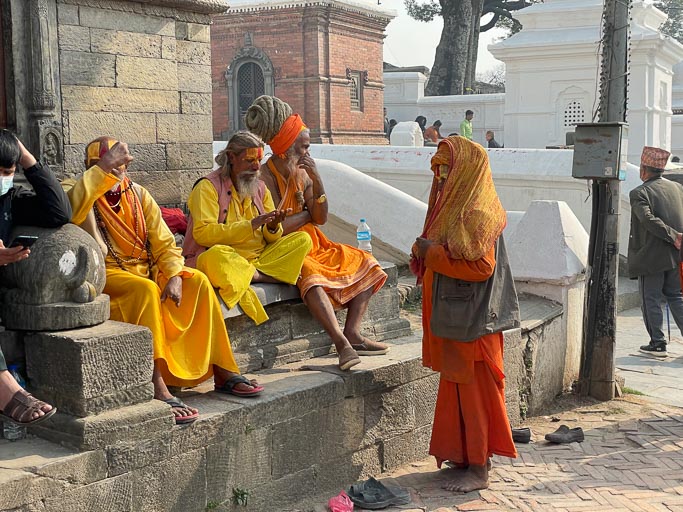
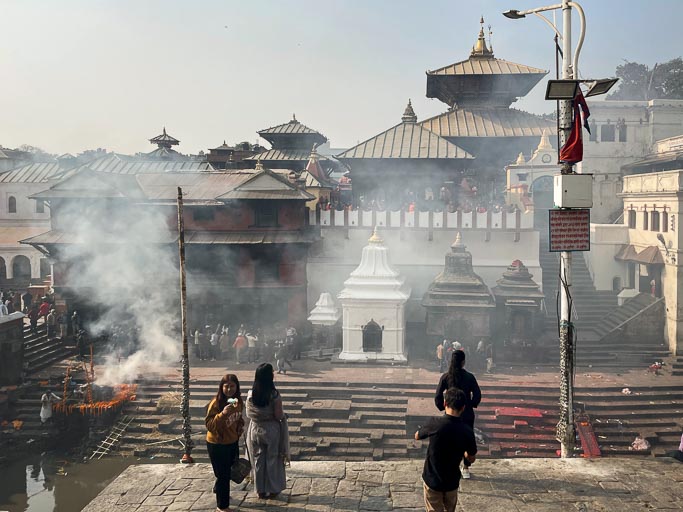
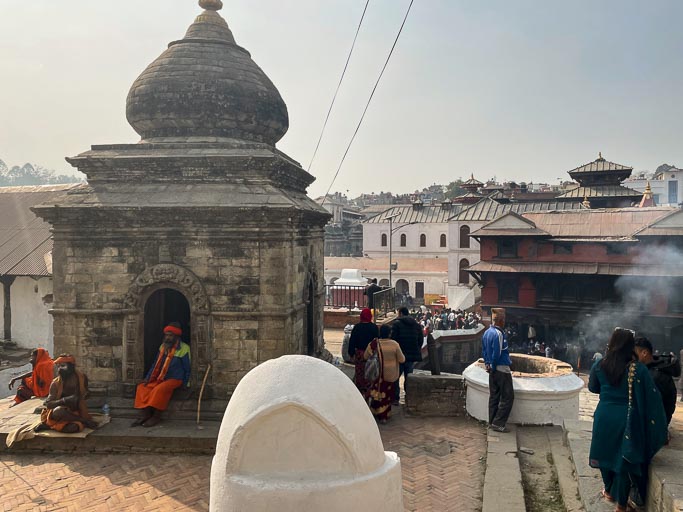
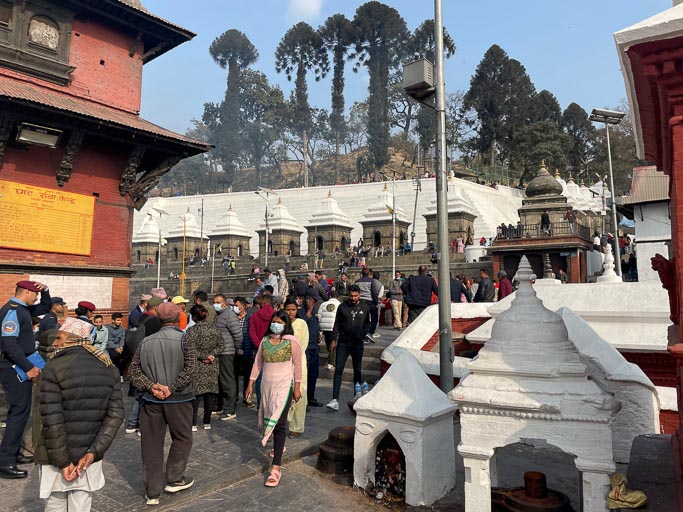
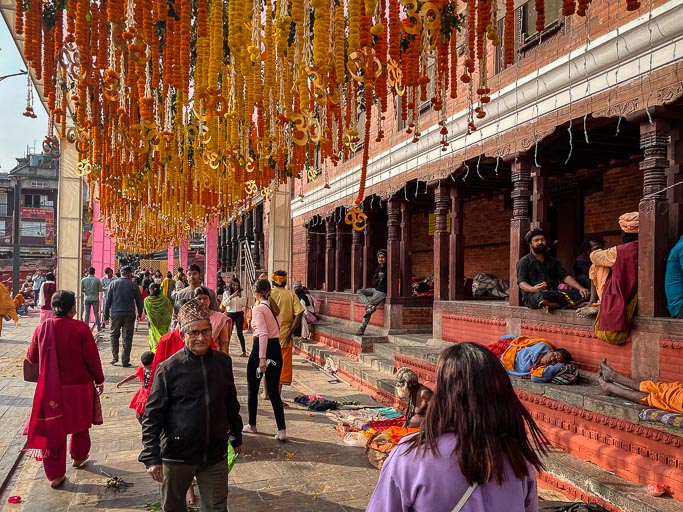
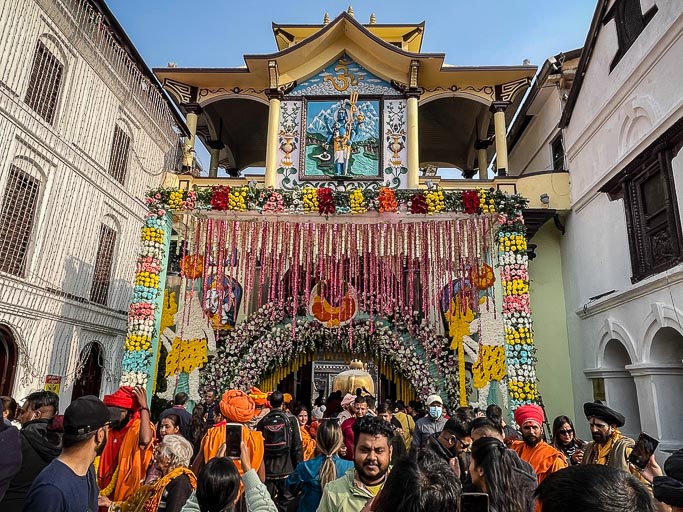
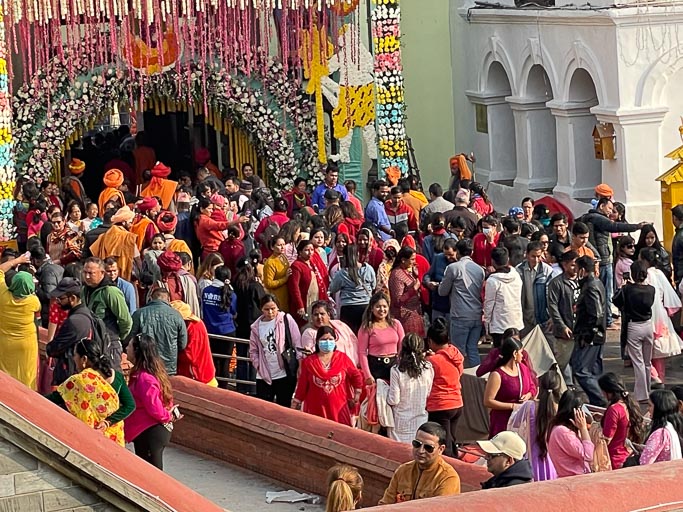
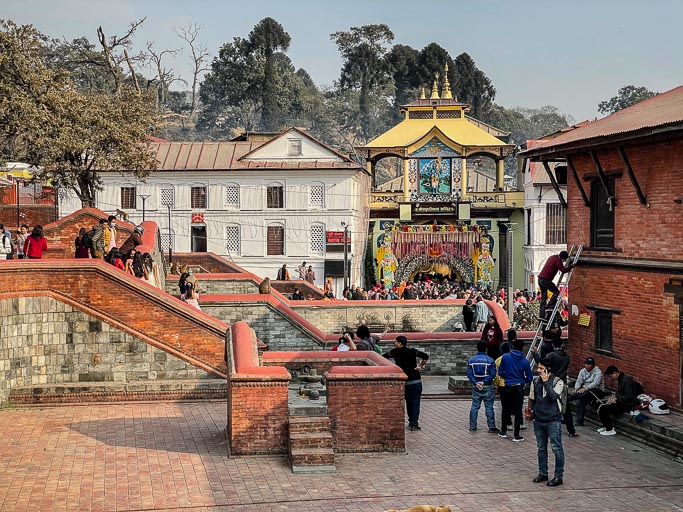
Pashupatinath (auch Pashu Pati Nath oder Pashupati Nath, wörtlich: „Herr des Lebens“ oder auch „Herr alles Lebendigen“, nepali: पशुपतिनाथ Paṣupatināth) bei Kathmandu in Nepal ist eine der wichtigsten Tempelstätten des Hinduismus. Für viele Shivaiten gehört der Tempel zu den wichtigsten Verehrungsstätten Shivas und zählt für einige zu den Jyotirlingas. Tausende von Hindus, die von weither anreisen, feiern hier jedes Frühjahr das Fest Shivaratri. Das Heiligtum wurde mit den anderen Sehenswürdigkeiten des Kathmandutals bereits im Jahr 1979 als Weltkulturerbe der UNESCO klassifiziert.
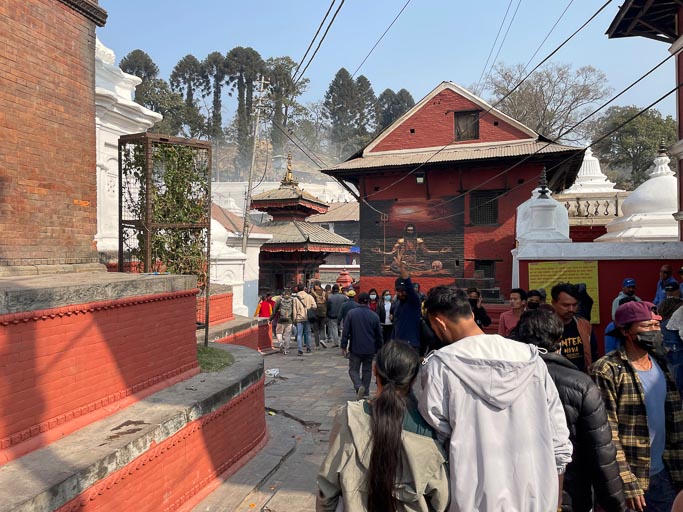
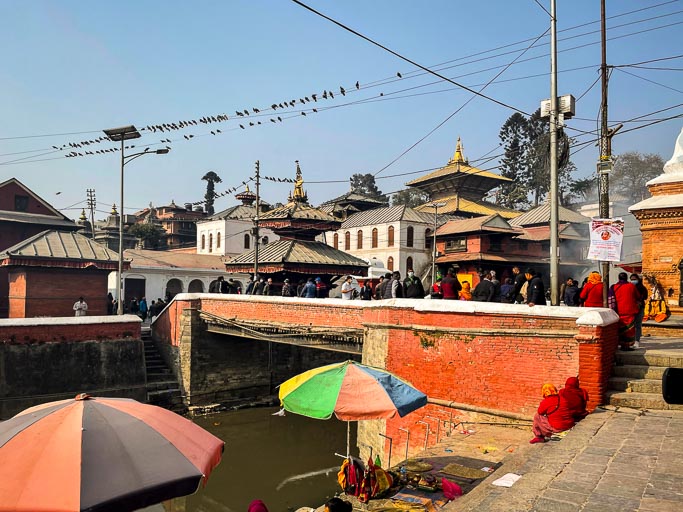
Im Tempel wird Shiva als Pashupati („Gott des Lebens“ – Pashu = „Leben“) verehrt. Der eigentliche Tempel ist nur für Hindus zugänglich, der äußere Tempelbezirk darf hingegen von jedermann betreten werden. Der Tempel bildet eine Pagode mit zwei Dachebenen, die mit vergoldetem Kupfer bedeckt sind. In der Cella (garbhagriha) im Inneren des Tempels befindet sich ein ca. 1,80 m hoher viergesichtiger Shiva-Lingam mit einem Durchmesser von etwa 1,10 m hat. Er darf ausschließlich von vier Priestern (bhattas) berührt werden, die immer aus dem Süden Indiens stammen müssen.
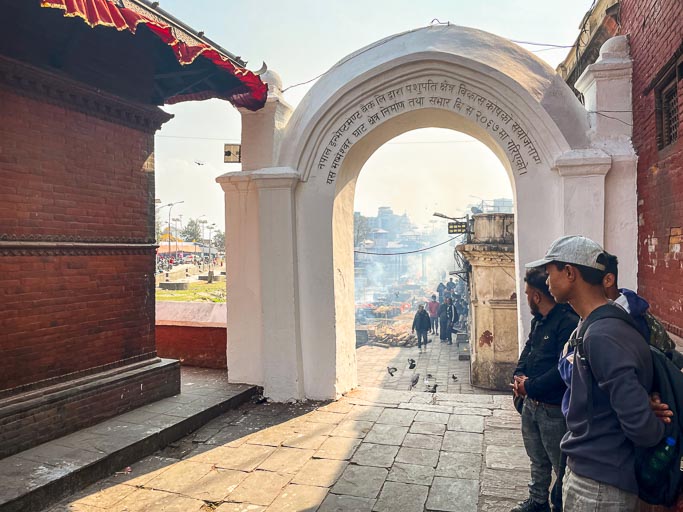
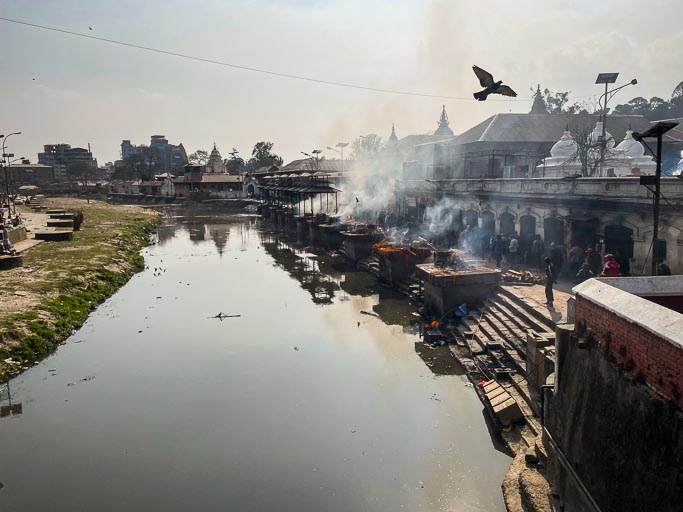
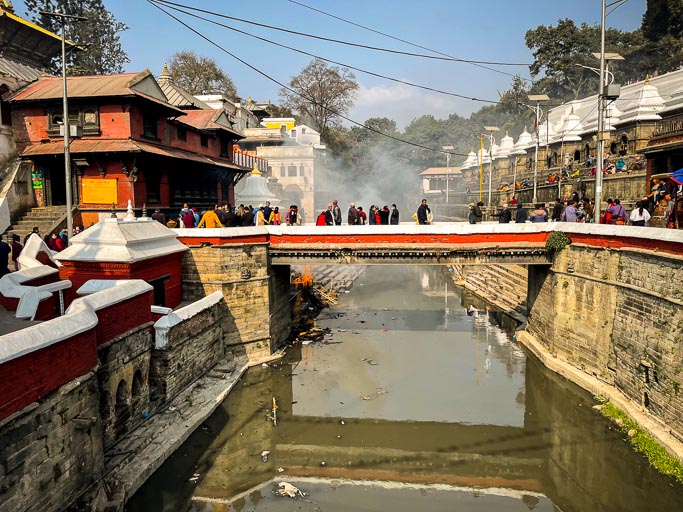
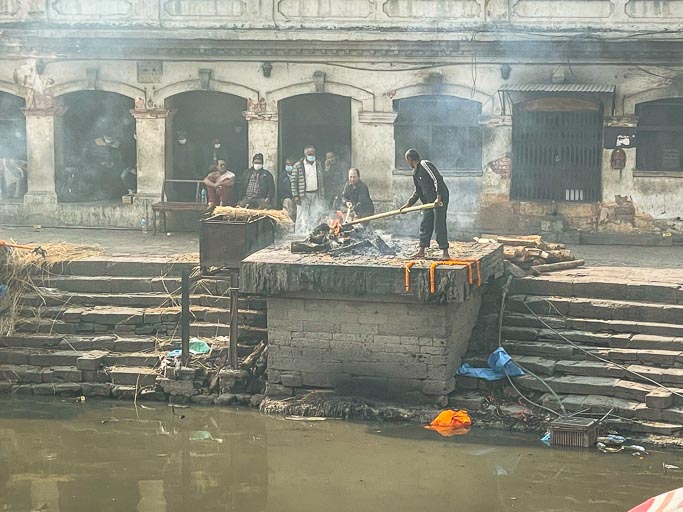
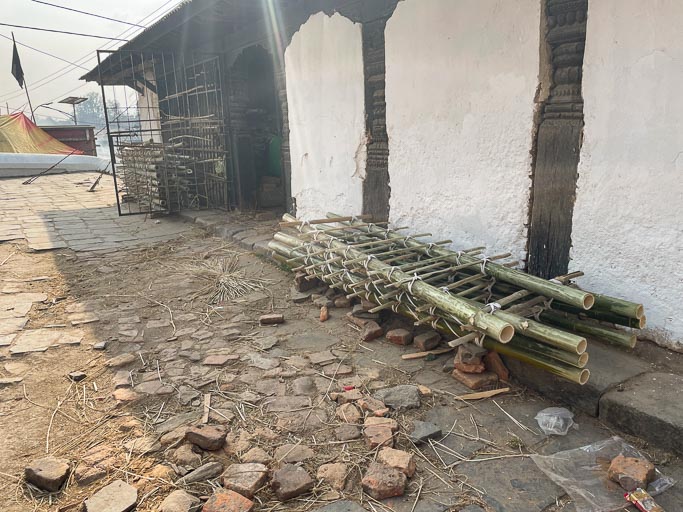
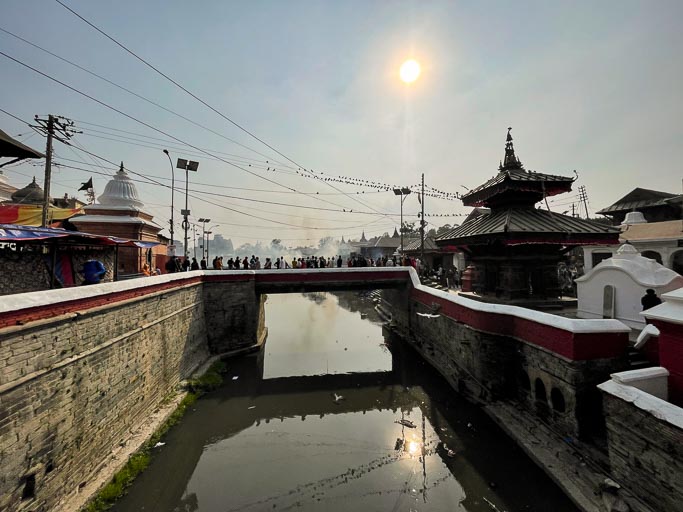
Der Fluß Bagmati teilt die Anlage in zwei große Bereiche. Auf dem rechten Ufer des Bagmati liegen der Pashupatinath-Tempel und die Verbrennungsstätten, die Arya Ghats (Verbrennungsstätten der höheren Kasten) und die Surya Ghats (Verbrennungsstätten der niederen Kasten). Dieser Ort hat für viele Gläubige als Platz für die „letzten Riten“ besondere Bedeutung: es gilt als erstrebenswert, seine Leiche hier verbrennen zu lassen. (Quelle: Wikipedia)
Bilder einer Reise in 2023