Swayambhunath Tempel
Swayambhunath Tempel
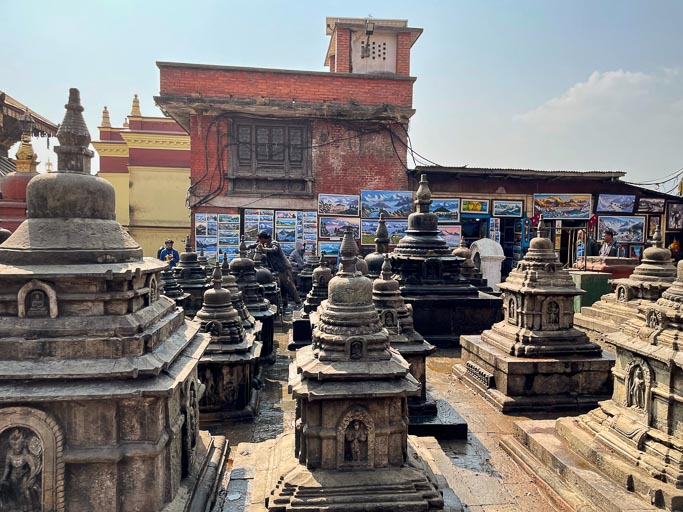
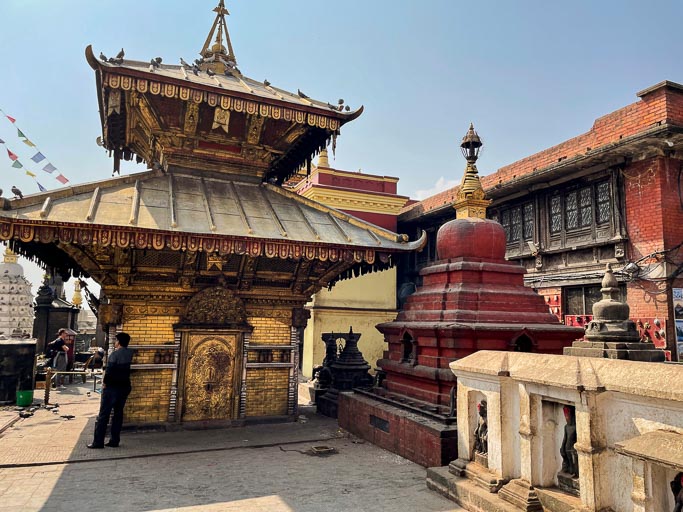
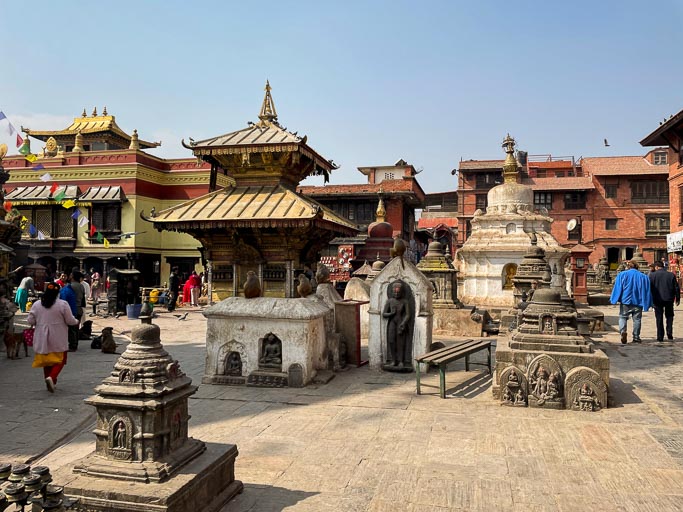
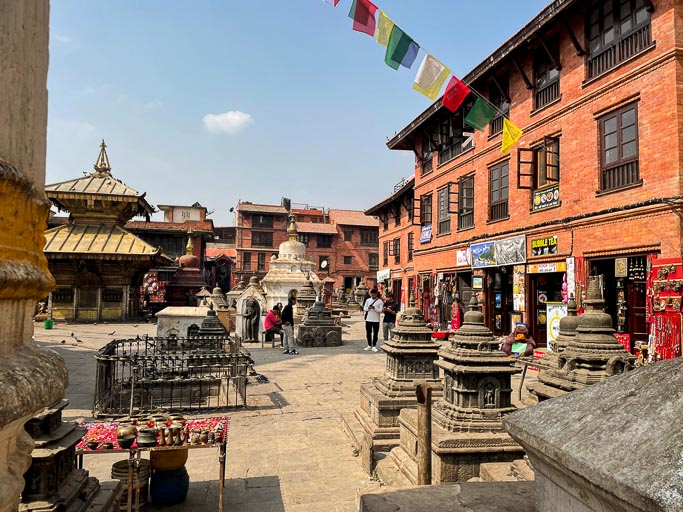
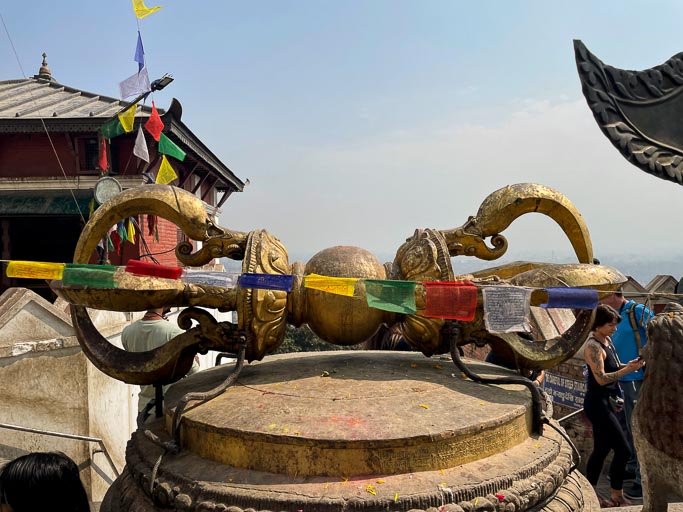
Swayambhunath – Tempelkomplex über dem Kathmandutal
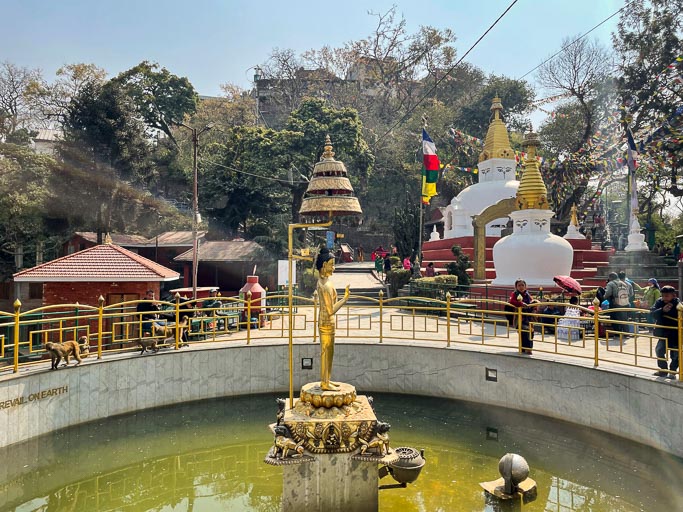
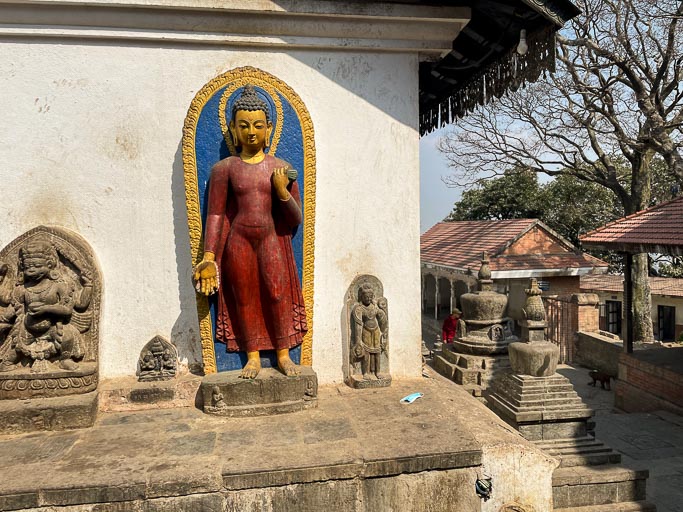
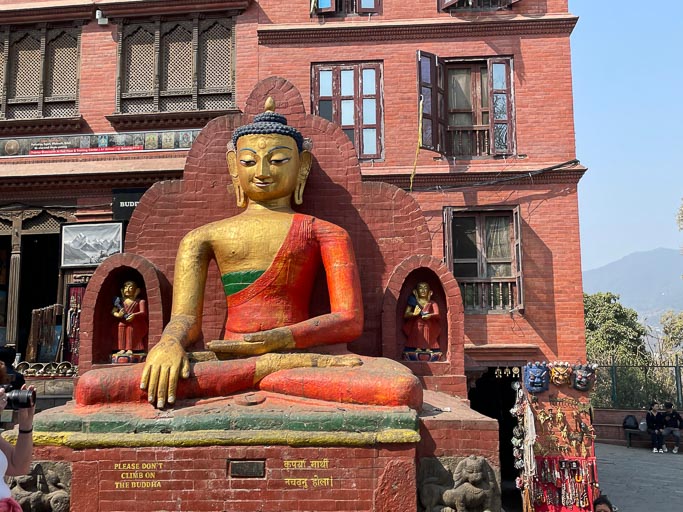
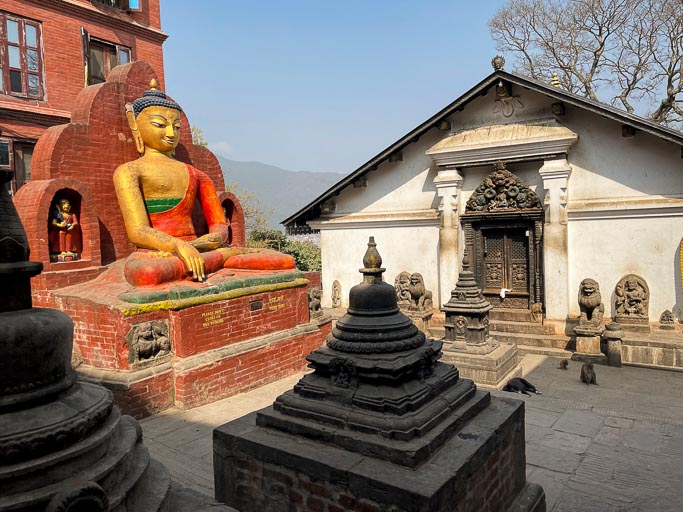
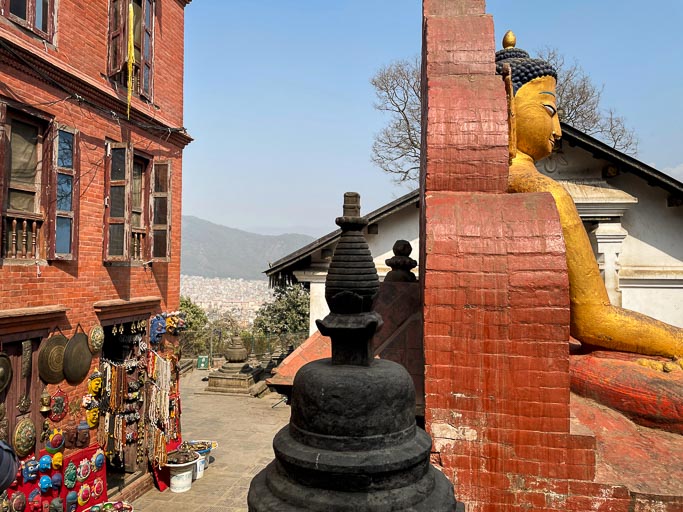
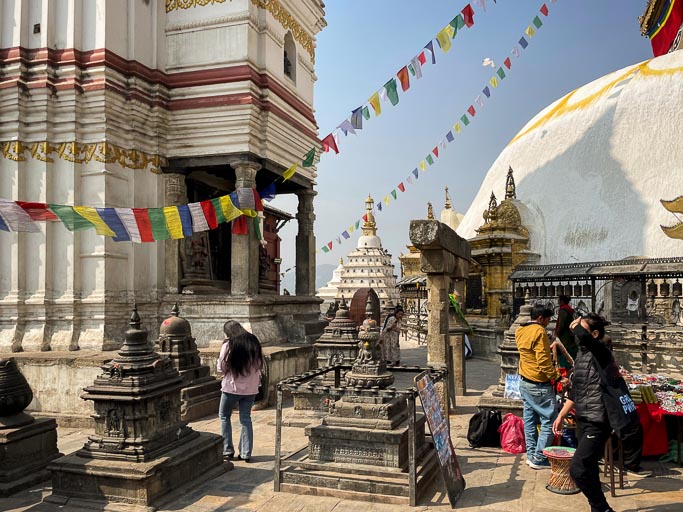
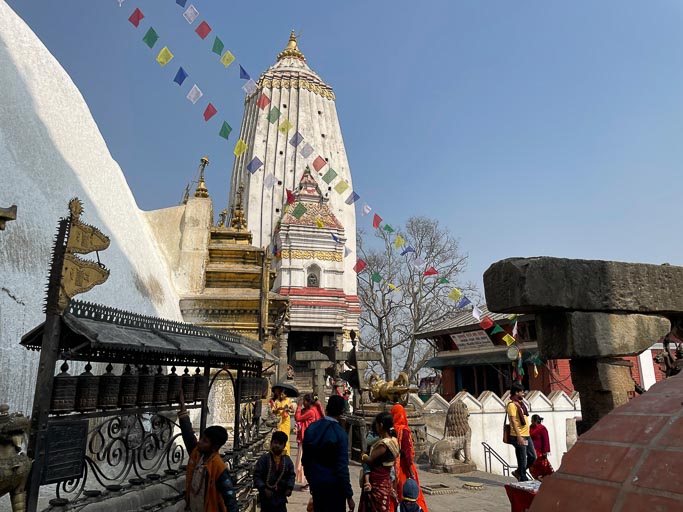
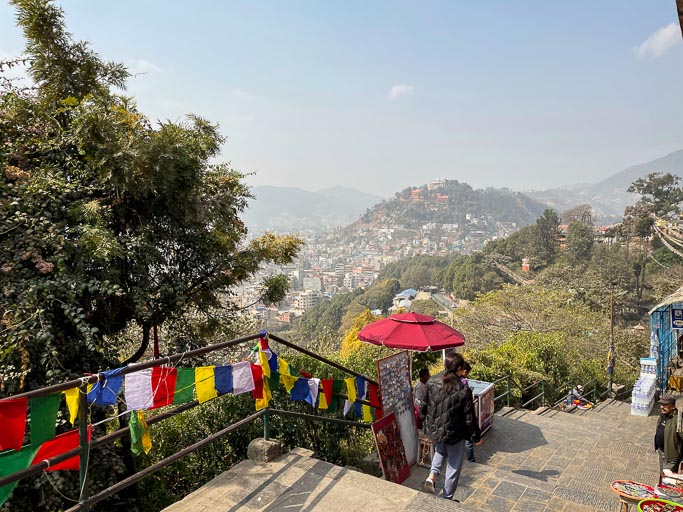
Swayambhunath (Nepali: स्वयम्भूनाथ स्तुप – Svayambhūnāth Stupa) ist ein überwiegend buddhistischer Tempelkomplex auf einem Hügel im Westen von Kathmandu.
Neben Borobudur auf Java gilt Swayambhunath als eine der ältesten buddhistischen Tempelanlagen der Welt. Das Alter der inneren Bauten wird auf etwa 2.500 Jahre geschätzt, spätere Umbauten und Erweiterungen folgten in den Jahrhunderten danach. Der Legende nach ist die Anlage eng mit der Entstehung des Kathmandutals verbunden.
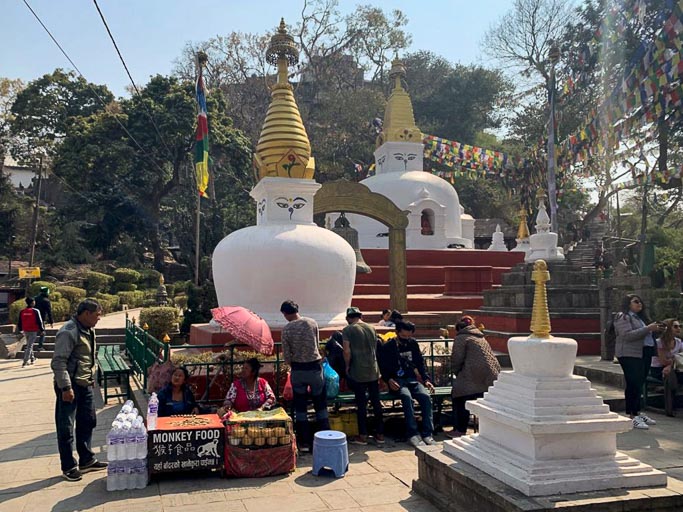
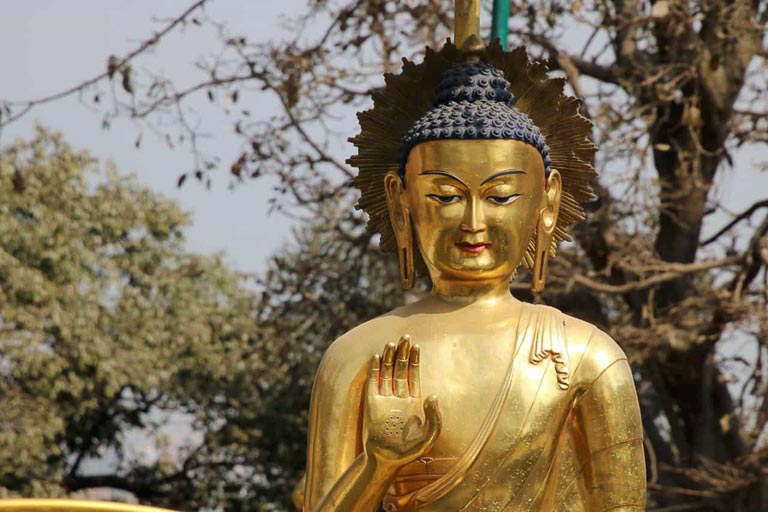
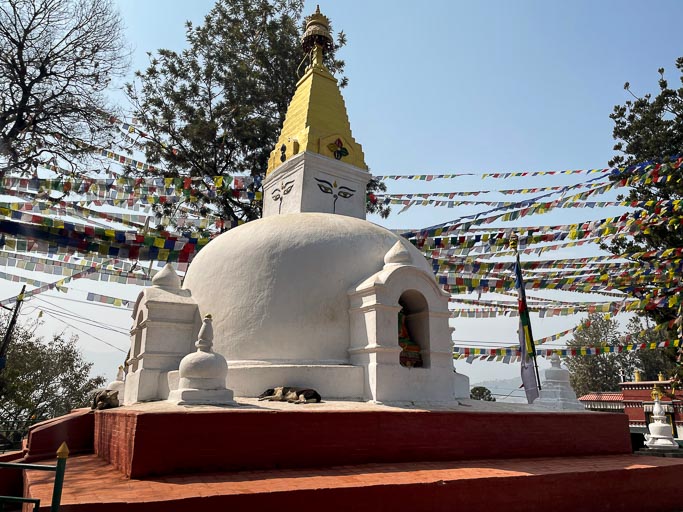
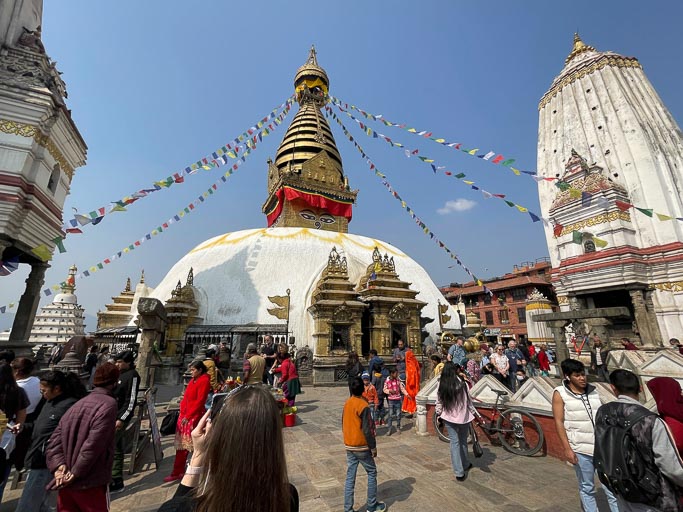
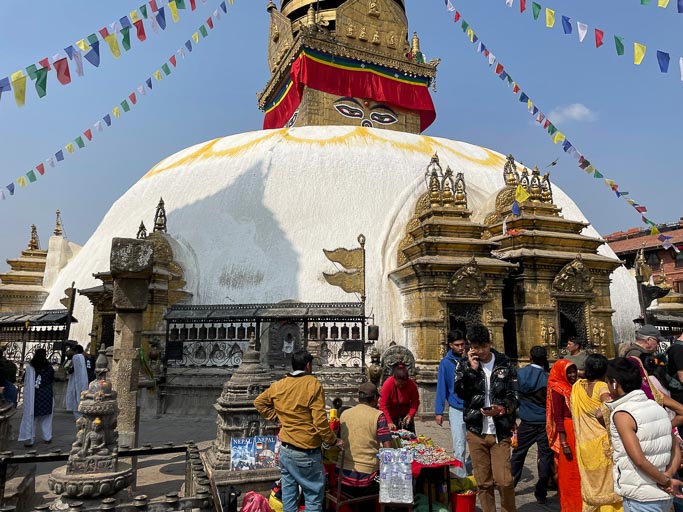
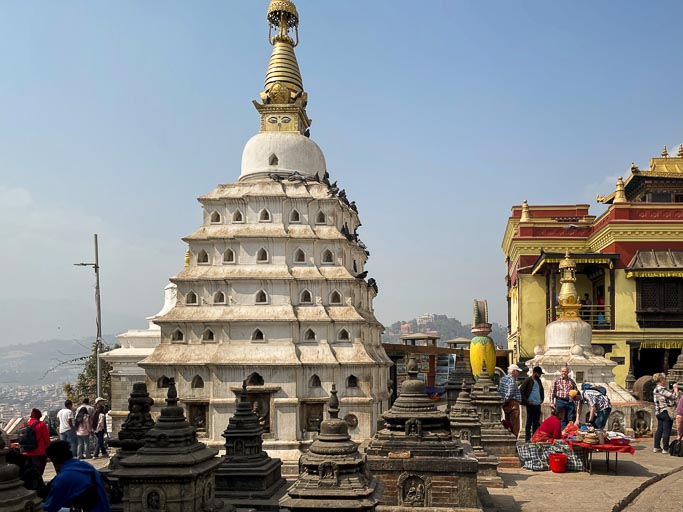
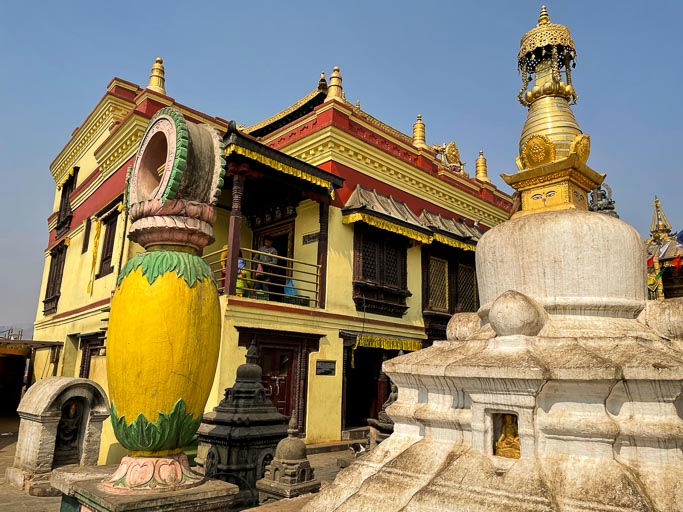
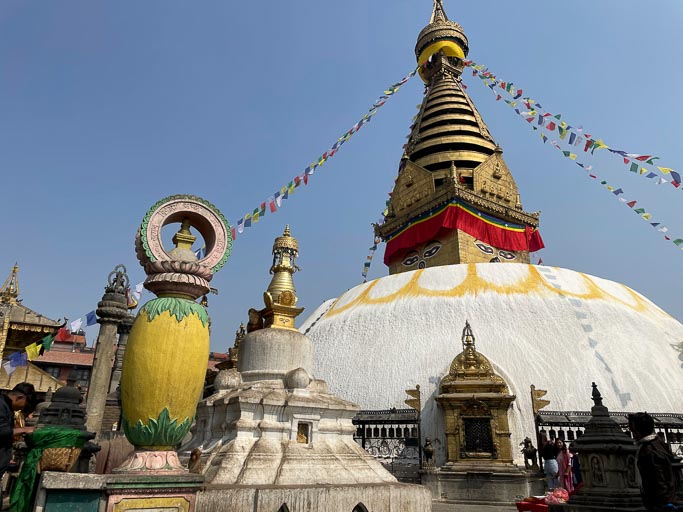
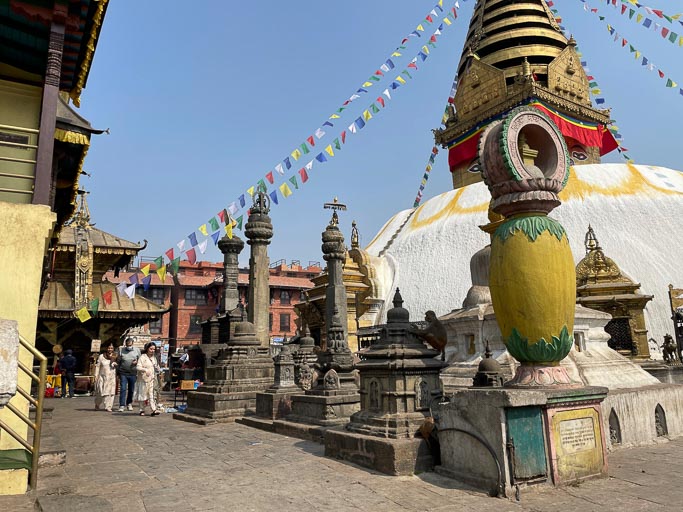
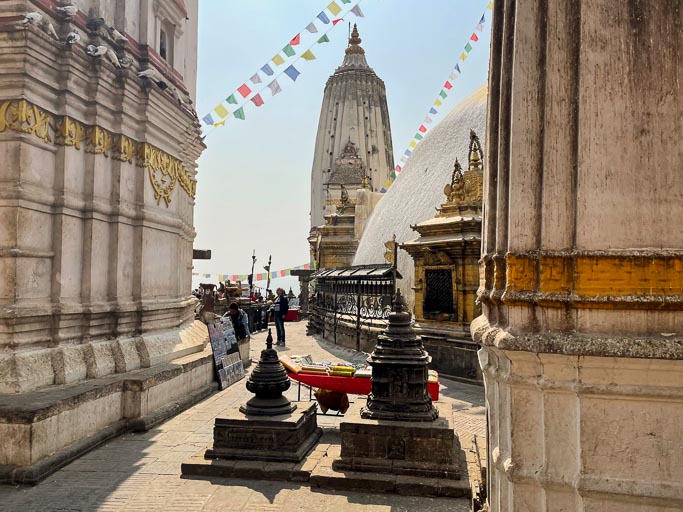
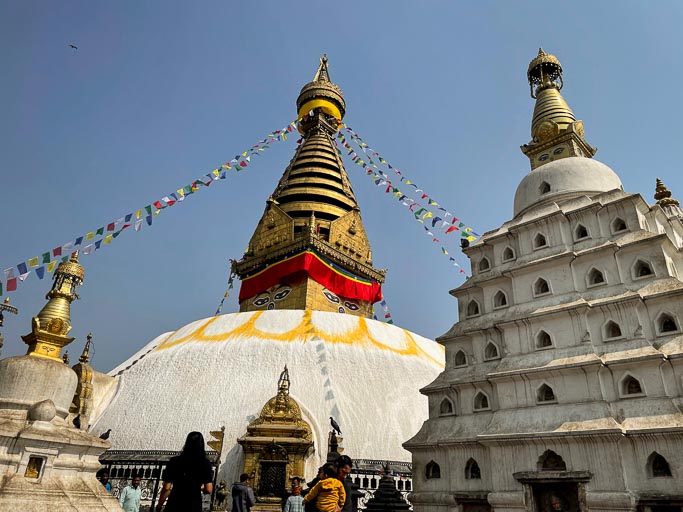
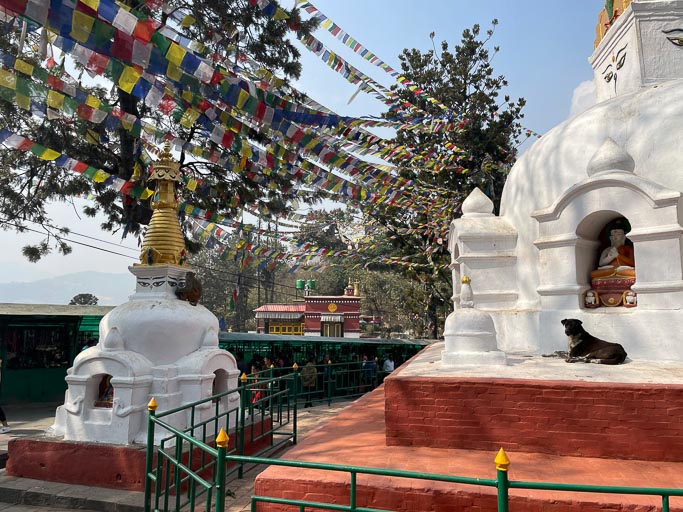
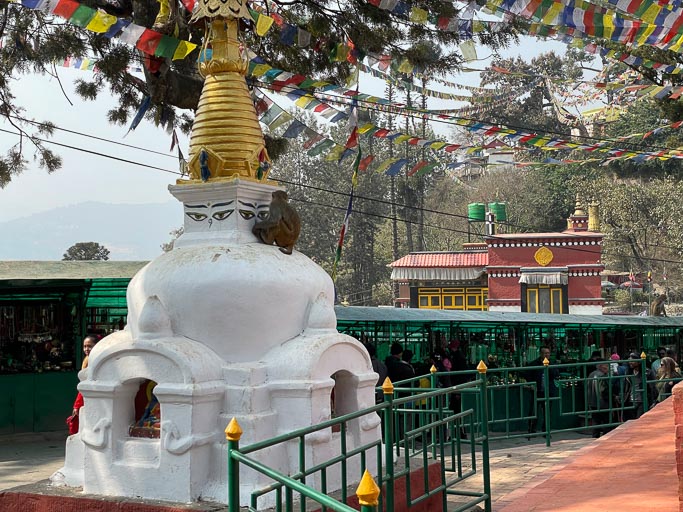
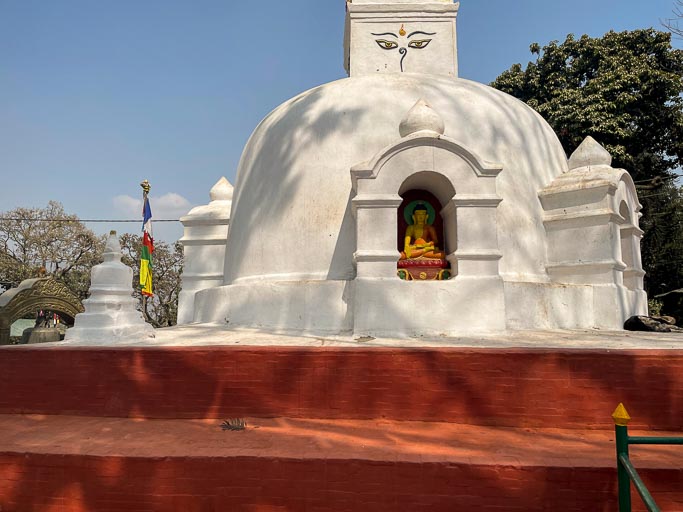
Das zentrale Element ist der große buddhistische Stupa mit den charakteristischen, aufgemalten Augen, die in alle Himmelsrichtungen blicken. Von Kathmandu aus ist er weithin sichtbar. Wie an vielen Orten im Tal sind auch hier buddhistische und hinduistische Kultstätten eng miteinander verflochten.
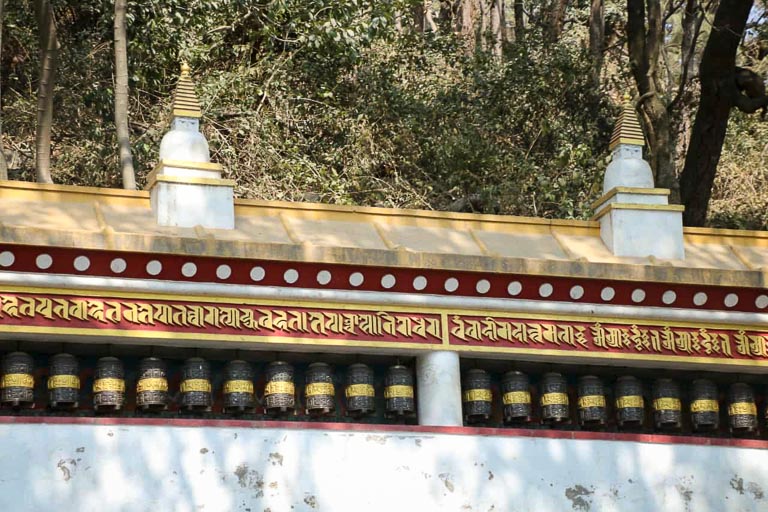
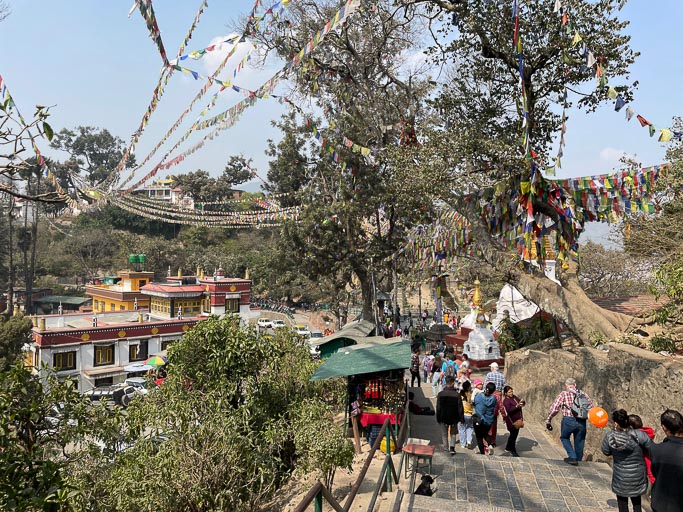
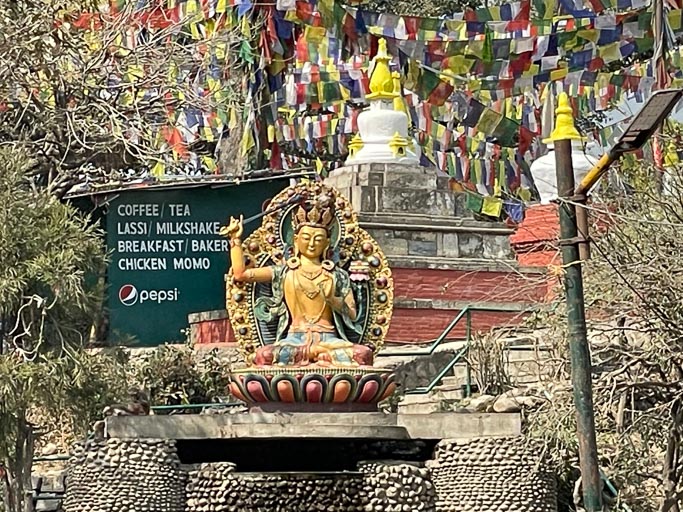
Am Fuß des Hügels befindet sich eine Steinplatte mit den Fußabdrücken Buddhas. Von dort führen 365 Stufen, gesäumt von Figuren und Manisteinen, hinauf zur Tempelanlage.
Beim schweren Erdbeben im April 2015 wurden zahlreiche Gebäude beschädigt oder zerstört; der zentrale Stupa blieb jedoch erhalten.
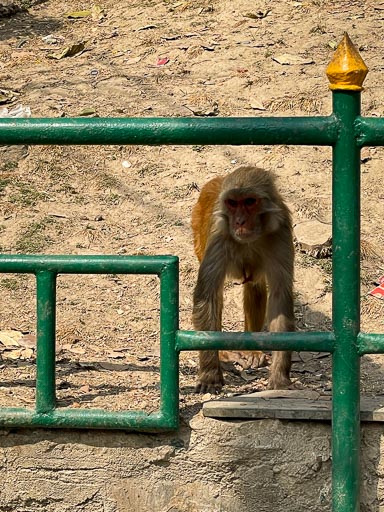
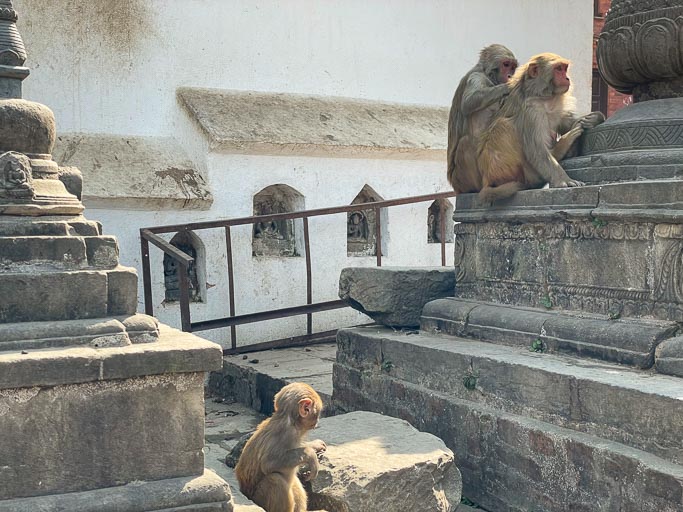
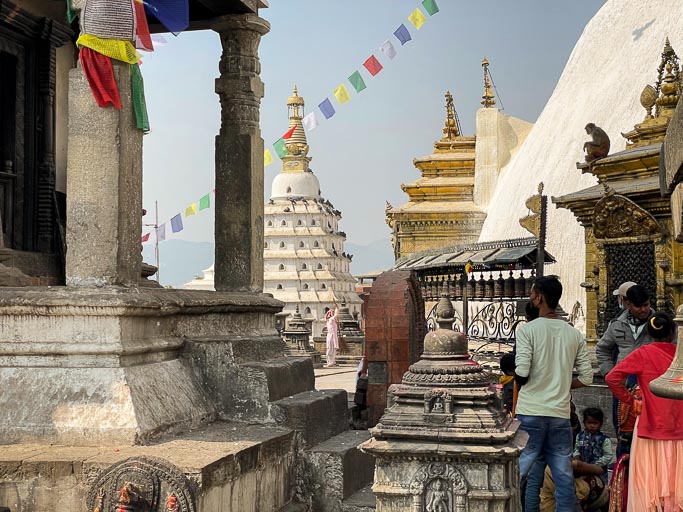
Wegen der vielen dort lebenden Rhesusaffen wird Swayambhunath von Reisenden auch „Tempel der Affen“ genannt.
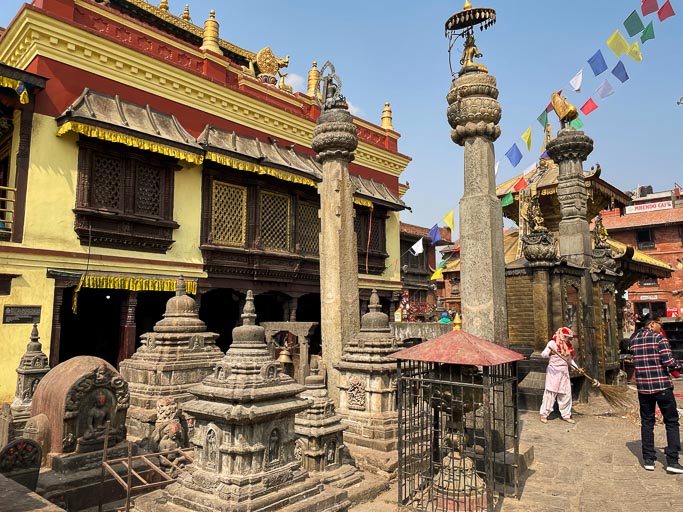
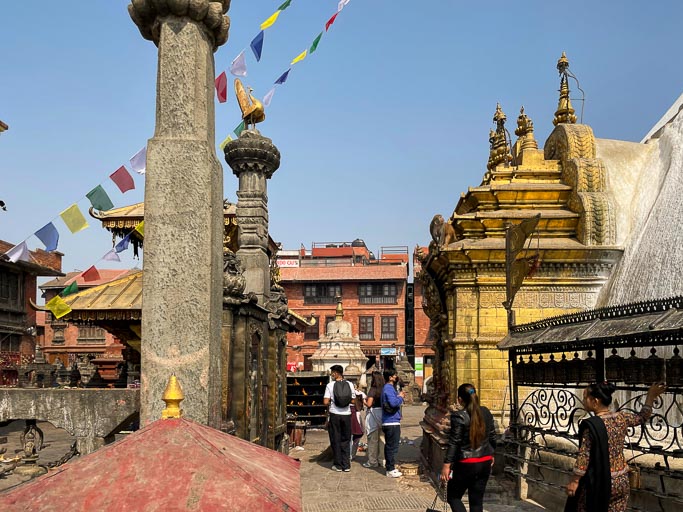
Bilder einer Reise in 2023.
Swayambhunath – Temple Complex above the Kathmandu Valley
Swayambhunath (Nepali: स्वयम्भूनाथ स्तुप – Svayambhūnāth Stupa) is a primarily Buddhist temple complex situated on a hill in the western part of Kathmandu.
Alongside Borobudur in Java, Swayambhunath is considered one of the oldest Buddhist temple sites in the world. The inner structures are estimated to be about 2,500 years old, with later additions and renovations over the centuries. According to legend, the site is closely linked to the origin of the Kathmandu Valley.
The dominant feature is the large Buddhist stupa with its iconic painted eyes gazing in all directions. It is clearly visible from many parts of Kathmandu. As in many places in the valley, Buddhist and Hindu shrines coexist closely here.
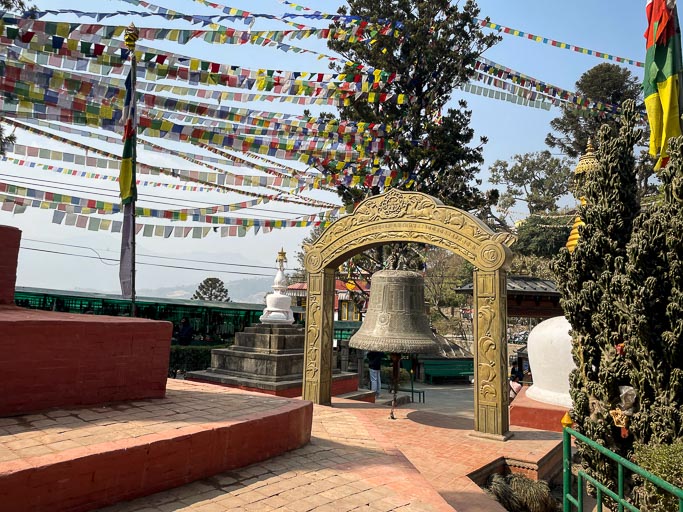
At the foot of the hill lies a stone slab bearing the footprints of Buddha. From there, a staircase of 365 steps, lined with statues and mani stones, leads up to the temple complex.
During the devastating earthquake in April 2015, many surrounding buildings were damaged or destroyed, though the central stupa remained standing.
Because of the large population of rhesus monkeys living on the hill, Swayambhunath is also known as the “Monkey Temple.”
Images from a trip in 2023.