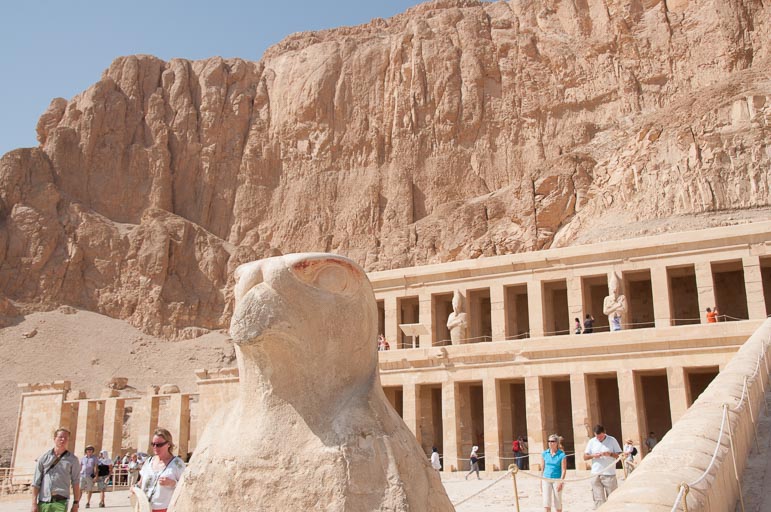
Totentempel der Hatschepsut
Totentempel der Hatschepsut
Totentempel der Hatschepsut – Deir el-Bahari
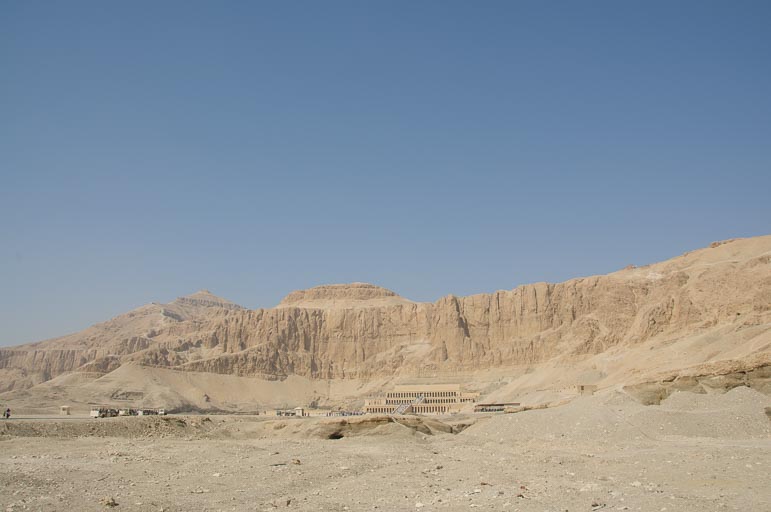
Der Totentempel der Hatschepsut stammt aus der 18. Dynastie und ist der am besten erhaltene Tempel in Deir el-Bahari am Westufer des Nil bei Theben.
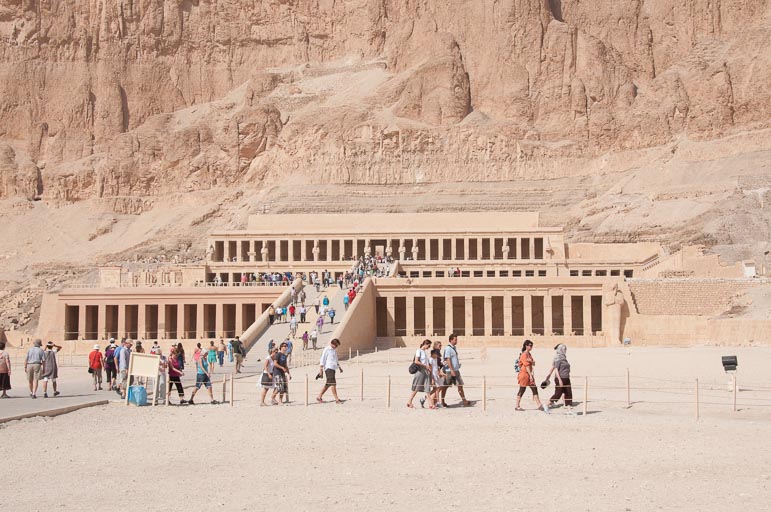
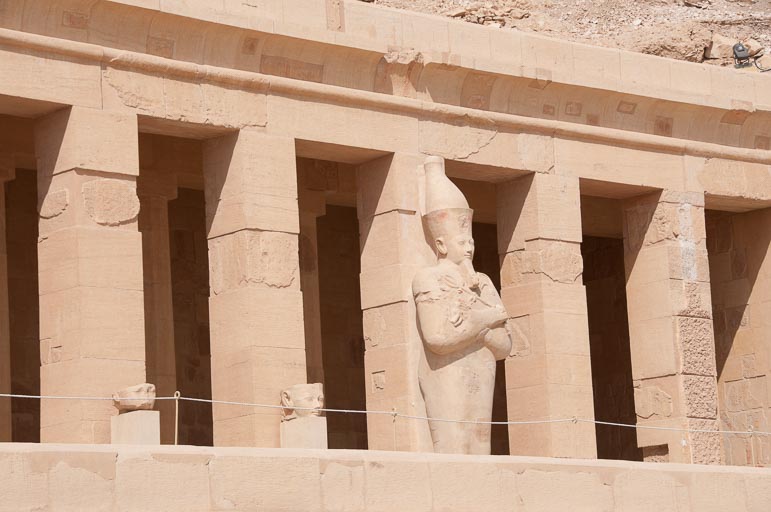
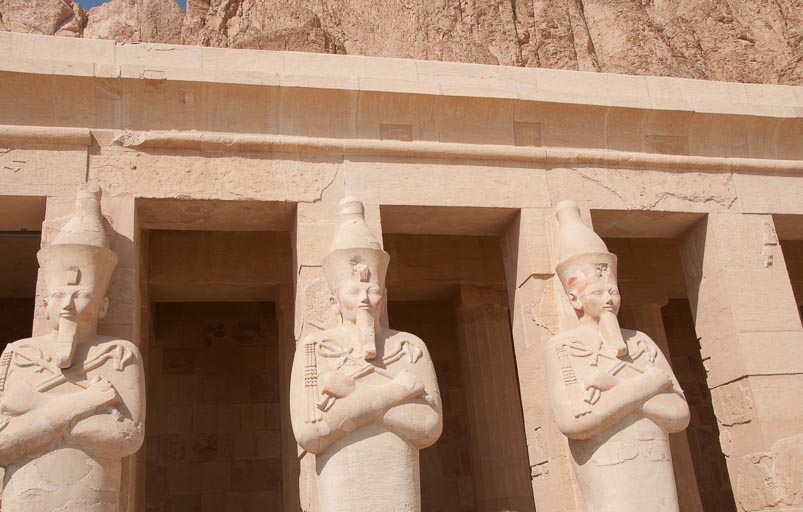
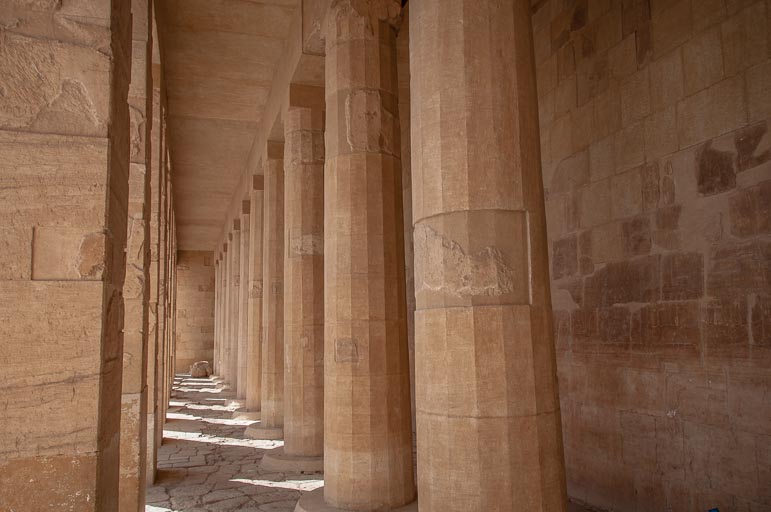
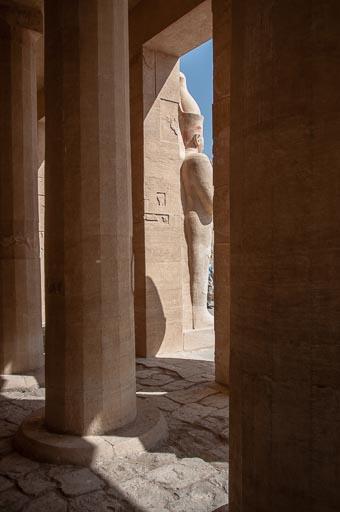
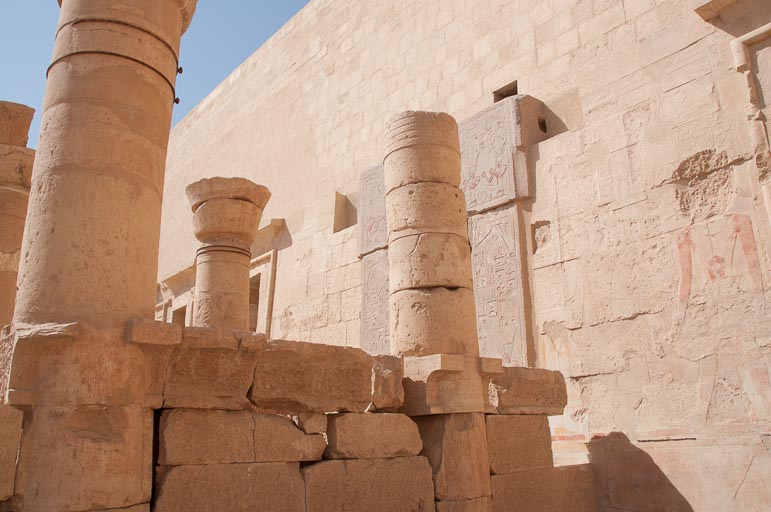
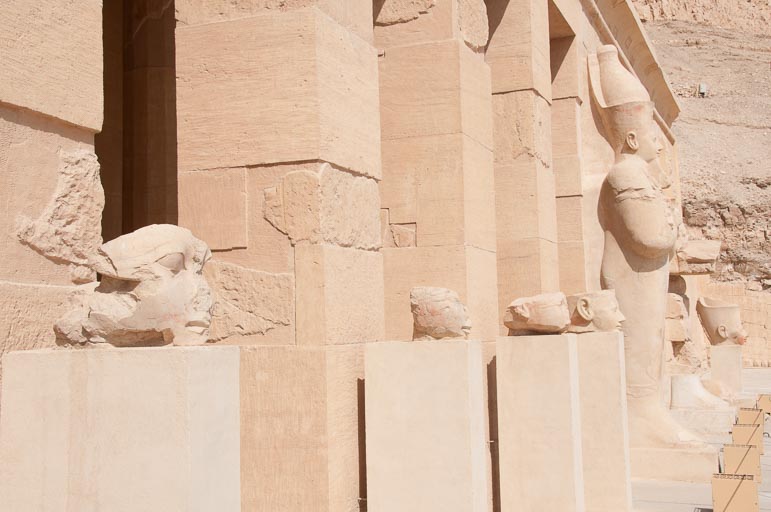
Besonders auffällig ist seine außergewöhnliche Architektur: Die üblichen Pylone wurden durch offene Pfeilerhallen am Anfang mehrerer Terrassen ersetzt. Der gesamte Tempel wurde aus Kalkstein errichtet.
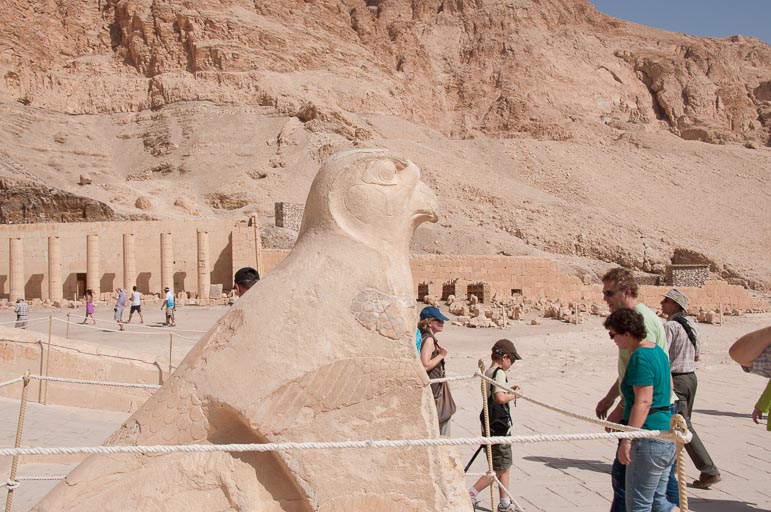
Der Talkessel von Deir el-Bahari war vor allem den Göttern Hathor und Amun-Re geweiht, daneben auch Horus, Anubis, Amun und Iunmutef.
Der Tempel wurde bis in ptolemäische Zeit genutzt. In koptischer Zeit entstand auf dem Tempel das Phoibammon-Kloster, das bis ins 11. Jahrhundert bestand.
Der Totentempel gilt als sogenanntes Millionenjahrhaus. Er wurde innerhalb von etwa 15 Jahren errichtet – vom 7. bis zum 22. Regierungsjahr der Königin Hatschepsut. (Quelle: Wikipedia)
Mortuary Temple of Hatshepsut – Deir el-Bahari
The Mortuary Temple of Hatshepsut dates from the 18th Dynasty and is the best preserved temple in Deir el-Bahari on the western bank of the Nile near Thebes.
Its architecture is particularly distinctive: the usual pylons are replaced by open colonnades at the front of several terraces. The entire temple was built from limestone.
The valley of Deir el-Bahari was mainly dedicated to the gods Hathor and Amun-Re, but also to Horus, Anubis, Amun and Iunmutef.
The temple remained in use until the Ptolemaic period. In Coptic times the Phoibammon Monastery was built on the site and remained active until the 11th century.
The temple is a so-called “Temple of Millions of Years”. It was built within about fifteen years, from the 7th to the 22nd regnal year of Queen Hatshepsut. (Source: Wikipedia)